

Falling Insurance Pricing in Asia Mask Growing Claims Complexity and Selective Underwriting, Aon Report

Across Asia, overall pricing declined by 1% to 10% in the third quarter, supported by ample capacity, flexible underwriting and stable coverage. The regional average, however, masks wide differences between markets. China, Hong Kong, India, Korea and Singapore each recorded reductions in this range, while Japan saw increases of 1% to 10% alongside constrained capacity and more restrictive coverage.
“Asia’s insurance market is creating meaningful opportunities for organisations, but this is not a uniform soft market,” said Jon Pipe, Head of Commercial Risk Solutions, Asia, Aon. “Businesses that can demonstrate the quality of their risk through robust data, effective risk management and a clear understanding of their exposures are well positioned to take advantage of available capacity. This gives them an opportunity to look beyond premium savings and strengthen coverage, terms and overall programme resilience.”
Capacity creates greater choice as insurers remain selective
Ample capacity, supported by strong reinsurance markets and insurer appetite, has given well-prepared businesses access to broader coverage and improved terms. Insurers remain selective, with catastrophe exposure, claims inflation, supply chain disruption and geopolitical volatility continuing to influence underwriting decisions.
Sector trends reveal different conditions across Asia’s insurance market
- Asia’s commercial insurance market remains soft overall, although conditions vary by line of business and market. Casualty, cyber, directors and officers (D&O) and property were soft at the regional level, while automobile was the only major product classified as moderate.
- Property showed the widest variation. Pricing in India fell by more than 31%, supported by new market entrants, an expanded reinsurance market and additional capacity. In Japan, pricing increased by 1% to 10%, alongside constrained capacity, reduced limits and more restrictive coverage. China, Hong Kong, Korea and Singapore recorded reductions of 1% to 10%, although underwriting continued to reflect catastrophe exposure and loss experience.
- Casualty pricing fell 11% to 20% in Hong Kong and 1% to 10% in China, India and Korea. Japan recorded increases of 1% to 10%, while Singapore remained flat amid greater scrutiny of higher-hazard and significant U.S. liability exposures. D&O pricing declined 11% to 20% in China and Hong Kong and 1% to 10% in Korea, Singapore and Japan, although the pace of reductions moderated. Singapore insurers continued to offer enhanced protection for well-managed risks, including investigation, regulatory, extradition and crisis-management costs.
- Cyber remained soft overall in Asia, with competitive capacity supporting favourable pricing and terms in Singapore, China, Hong Kong and Korea. Singapore underwriters placed greater emphasis on generative AI governance alongside ransomware, security controls and third-party dependencies. India and Japan recorded flat pricing and more rigorous underwriting amid higher claims activity.
- Automobile was the most pressured line. Pricing rose 1% to 10% in Japan and Korea, where elevated loss ratios and claims costs followed four consecutive years of reductions in Korea. China, Hong Kong and India saw reductions of 1% to 10% and Singapore remained flat.
Claims complexity increases the importance of insurer selection
The report also finds that larger and increasingly interconnected losses are extending claims resolution timelines for key corporate and specialty risks across Asia. Geopolitical uncertainty and supply chain volatility are also adding complexity to assessments of insured values and indemnity periods. As a result, insurer selection increasingly extends beyond price and capacity to claims expertise, responsiveness and the ability to resolve complex disputes.
“Insurance pricing and risk exposures are not always moving in the same direction,” said Jamie Sparkes, Chief Claims Officer, Commercial Risk, Asia, Aon. “While organisations may be paying less for some risks, analytics can help assess whether limits, deductibles and coverage remain aligned with their potential financial impact. Businessescan use current market conditions to strengthen protection and build greater confidence against interconnected risksacross cyber, supply chains, natural catastrophes and other interconnected exposures.”
About Aon’s Global Insurance Market Insights Report
Aon’s Global Insurance Market Insights report highlights insurance market trends across pricing, capacity, underwriting, limits, deductibles and coverages. Published quarterly, the report also includes trends across key lines of business, including Automobile, Casualty/Liability, Cyber, Directors and Officers and Property, geographic insights highlighting shifts in market dynamics across regions, an overview of key global claims trends and analysis of the latest trends and issues impacting the insurance market.
Hashtag: #Aon
 https://www.aon.com/
 https://www.linkedin.com/company/aon
 https://twitter.com/Aon_plc
 https://www.facebook.com/Aonplc
 https://www.instagram.com/aonplc/
The issuer is solely responsible for the content of this announcement.
About Aon
Aon plc (NYSE: AON) exists to shape decisions for the better — to protect and enrich the lives of people around the world. Through actionable analytic insight, globally integrated Risk Capital and Human Capital expertise, and locally relevant solutions, our colleagues provide clients in over 120 countries with the clarity and confidence to make better risk and people decisions that help protect and grow their businesses.
Follow Aon on LinkedIn, X, Facebook and Instagram. Stay up-to-date by visiting Aon’s newsroom and sign up for news alerts here.
Disclaimer
The information contained in this document is solely for information purposes, for general guidance only and is not intended to address the circumstances of any particular individual or entity. Although Aon endeavours to provide accurate and timely information and uses sources that it considers reliable, the firm does not warrant, represent or guarantee the accuracy, adequacy, completeness or fitness for any purpose of any content of this document and can accept no liability for any loss incurred in any way by any person who may rely on it. There can be no guarantee that the information contained in this document will remain accurate as on the date it is received or that it will continue to be accurate in the future. No individual or entity should make decisions or act based solely on the information contained herein without appropriate professional advice and targeted research.







Kenanga Investment Bank Partners with Huatai Securities to Deepen Malaysia-China Capital Market Cooperation

Falling Insurance Pricing in Asia Mask Growing Claims Complexity and Selective Underwriting, Aon Report

HKGSEO Launches New SEO×GEO Dual-Engine Optimization Monthly Plan
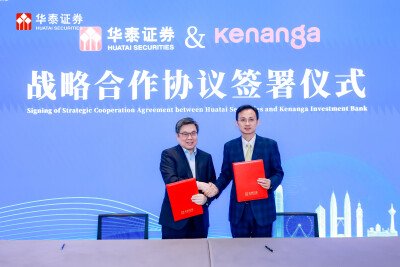
Kenanga Investment Bank Partners with Huatai Securities to Deepen Malaysia-China Capital Market Cooperation
Falling Insurance Pricing in Asia Mask Growing Claims Complexity and Selective Underwriting, Aon Report
HKGSEO Launches New SEO×GEO Dual-Engine Optimization Monthly Plan
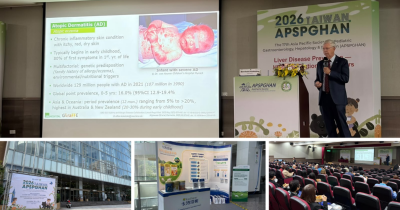
New Clinical Insights: Whole Goat Milk Formula Cuts Toddler Eczema Risk by 64%
Kenanga Investment Bank Partners with Huatai Securities to Deepen Malaysia-China Capital Market Cooperation
Falling Insurance Pricing in Asia Mask Growing Claims Complexity and Selective Underwriting, Aon Report
HKGSEO Launches New SEO×GEO Dual-Engine Optimization Monthly Plan