

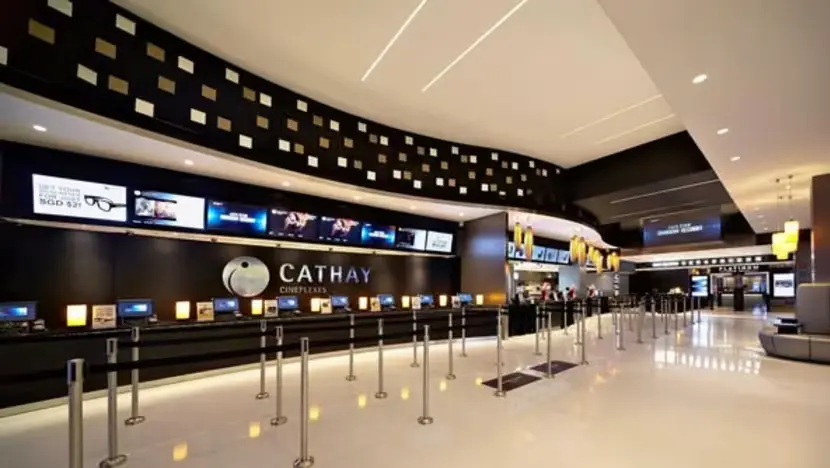
Photo Credits: https://dam.mediacorp.sg
Singapore’s oldest cinema chain has drawn its final curtain. After 86 years of operation, Cathay Cineplexes has officially ceased operations with immediate effect on 1st September 2025, marking the end of a significant chapter in the nation’s entertainment history. The Cathay Cineplexes shut down announcement came from parent company mm2 Asia, which declared voluntary liquidation due to insurmountable financial difficulties.
The Final Curtain Call
The entertainment company mm2 Asia announced on Monday that Cathay Cineplexes would undergo voluntary liquidation after determining that continuing operations was “no longer feasible”. This decision followed months of failed negotiations with creditors, as the struggling cinema chain was unable to arrive at mutually agreeable restructuring outcomes for its payment obligations.
The Cathay Cineplexes shutdown represents the collapse of what was once a cornerstone of Singapore’s film industry. The cinema chain faced multiple payment demands from landlords over arrears and other monies owed, with the company owing millions in rental payments across its remaining outlets.
A Legacy That Began in 1939
Cathay Cineplexes’ story began on 3rd October 1939, when the original Cathay Cinema opened its doors as Singapore’s first air-conditioned theatre. Located in the iconic Cathay Building at Handy Road, the 1,300-seat cinema was a technological marvel of its time and represented the pinnacle of luxury entertainment.
The cinema was the brainchild of Mrs Loke Yew and her son Loke Wan Tho, who created what would become Singapore’s first skyscraper and tallest building in Southeast Asia at that time. The Art Deco theatre featured black marble pillars, green-tiled floors, silver curtains, and gold ceilings, establishing a standard of opulence that would define the brand for decades.
Financial Troubles Mount
The path to the Cathay Cineplexes shut down was paved with escalating financial difficulties. mm2 Asia reported a staggering net loss of S$122.4 million in the 2025 fiscal year, a dramatic increase from the S$1.9 million loss recorded in 2024. This represented more than a 60-fold increase in losses within a single year.
The company’s struggles intensified throughout 2025, with numerous creditors issuing payment demands. In January 2025, landlords of Century Square and Causeway Point outlets demanded approximately S$2.7 million in unpaid rent and other costs. By July, the demands had escalated, with Lendlease Global Commercial Reit seeking S$3.4 million for the shuttered Jem premises.
The Closure Timeline
The Cathay Cineplexes shut down was preceded by a series of outlet closures that painted a picture of a chain in decline. The iconic original location at Handy Road closed in June 2022 after 83 years of operation. This was followed by closures at Cineleisure Orchard and Parkway Parade in 2023, as these locations were deemed no longer profitable.
The downward spiral continued into 2025, with the West Mall outlet closing in February due to lease expiry, and the Jem location shuttering in March after the landlord terminated the lease over rental arrears. By the time of the final announcement, only four outlets remained operational: Causeway Point, Downtown East, Century Square, and Clementi.
Industry-Wide Challenges
The Cathay Cineplexes shut down reflects broader challenges facing Singapore’s cinema industry. The sector has been battered by multiple factors including the COVID-19 pandemic’s impact on attendance, the rise of streaming services, and changing consumer habits.
Data from the Singapore Department of Statistics reveals a stark decline in cinema attendance, dropping from more than 20 million to less than 10 million over the past decade. This decline occurred despite an increase in the number of screens from approximately 220 to more than 260, highlighting the severity of the attendance crisis.
The industry has witnessed a wave of closures in recent years. Independent cinema operator The Projector announced its sudden closure in August 2025, citing rising operational costs and declining attendance. WE Cinemas and Filmgarde Cineplexes also ceased operations in 2024, leaving only Golden Village and Shaw Brothers as the major players remaining in Singapore’s cinema landscape.
Impact on Consumers
The Cathay Cineplexes shut down has left many consumers in limbo, particularly those who purchased the chain’s “Save Our Screens” vouchers. These vouchers, which included 10 movie tickets and refreshments for S$100, were launched earlier in 2025 as a desperate attempt to generate cash flow. Unfortunately, customers who have not used their vouchers will need to file claims with the appointed liquidator, as the company cannot issue direct refunds.
The closure has also sparked concerns about the future of cinema accessibility in certain areas, particularly for residents in the heartlands who relied on Cathay outlets for their movie-going experiences.
Market Consolidation
With the Cathay Cineplexes shut down, Singapore’s cinema market faces significant consolidation. The remaining major operators, Golden Village and Shaw Brothers, now hold an effective duopoly over the market. This concentration raises questions about competition, pricing, and the diversity of cinema offerings available to Singaporeans.
Industry observers note that both surviving chains have their own challenges, though they appear to be in more stable financial positions than their departed competitors. Golden Village benefits from its widespread presence and membership programmes, whilst Shaw Brothers has the advantage of owning some of its prime real estate locations.
Lessons from the Shutdown
The Cathay Cineplexes shutdown offers several important lessons about the challenges facing traditional entertainment businesses in the digital age. Executive chairman Melvin Ang acknowledged that the company had struggled to adapt to changing market conditions, noting that “the road to recovery has been longer than anyone expected”.
The closure highlights the importance of landlord relationships in the cinema business, as rental costs represented a significant portion of operating expenses. mm2 Asia’s inability to negotiate sustainable arrangements with property owners ultimately proved fatal to the business.
Looking Forward
The Cathay Cineplexes shutdown marks the end of an institution that served multiple generations of Singaporeans. From its pioneering days as the nation’s first air-conditioned cinema to its final screenings in 2025, the brand witnessed and participated in Singapore’s transformation from a colonial trading post to a modern metropolitan city-state.
The closure serves as a reminder of the rapid pace of change in the entertainment industry and the challenges faced by traditional businesses in adapting to digital disruption. As Singapore’s cinema landscape continues to evolve, the legacy of Cathay Cineplexes remains embedded in the cultural memory of those who experienced the magic of movies within its walls.
For the remaining cinema operators, the Cathay Cineplexes shut down represents both a cautionary tale and an opportunity. The survivors must learn from Cathay’s struggles whilst finding innovative ways to attract audiences back to the big screen, ensuring that cinema culture continues to thrive in Singapore despite the challenges of the digital age.
The extraordinary general meeting of Cathay Cineplexes members and the meeting of creditors will be convened in due course to formally conclude the liquidation process. With this final administrative step, one of Singapore’s most enduring entertainment brands will officially close its books, ending a remarkable 86-year journey that began with dreams of bringing Hollywood glamour to Southeast Asia’s shores.





Geopolitical instability and interconnected risks raise fears of Black Swan scenarios

Cardumen Capital Strengthens Global Reach Through Its Taipei-Based APAC Partner Following NVIDIA's Acquisition of Its Portfolio Company Illumex

VinEnergo Announces Global Strategy, Deploys First 10 GW International Renewable Energy Portfolio

Why Gold Medalist Alysa Liu Is Suddenly Everywhere

US Israel War Sparks Global Inflation Rise
Singapore Latest Travel Advisory: Dubai Flights Halt

15 Best Restaurants In Singapore Locals Love In 2026

Geopolitical instability and interconnected risks raise fears of Black Swan scenarios

Cardumen Capital Strengthens Global Reach Through Its Taipei-Based APAC Partner Following NVIDIA's Acquisition of Its Portfolio Company Illumex

VinEnergo Announces Global Strategy, Deploys First 10 GW International Renewable Energy Portfolio
