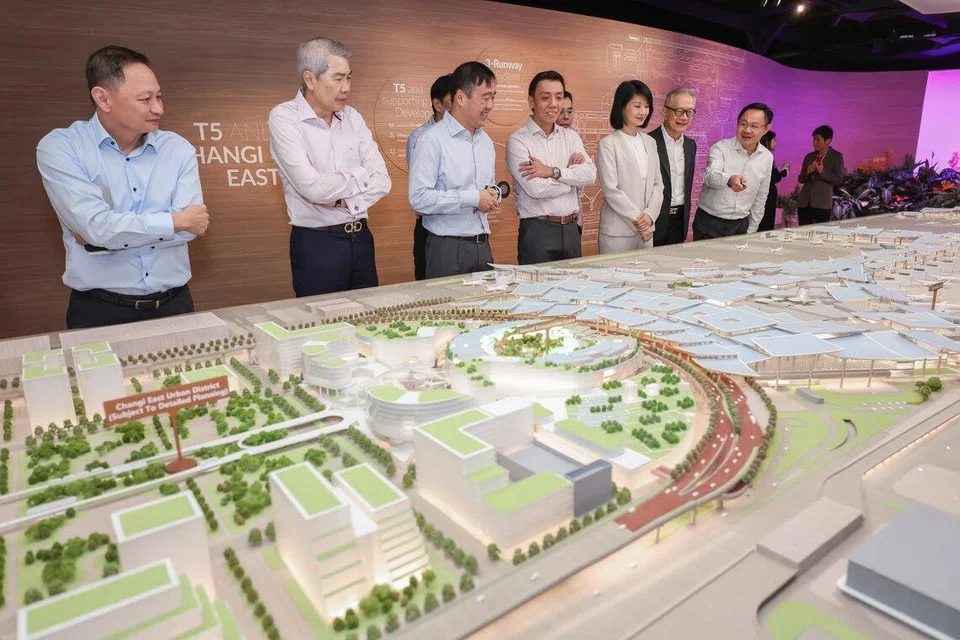
Photo Credits: The Straits Times
Singapore’s aviation sector has reached a remarkable milestone as Changi Airport welcomed its highest passengers ever in 2025. This impressive achievement marks a significant turning point for global aviation recovery and underscores Singapore’s pivotal role as a leading international travel hub in Asia. The record-breaking performance demonstrates not only the resilience of the aviation industry but also the strategic importance of world-class airport infrastructure in supporting economic growth and connectivity.
The Record-Breaking Year: 70 Million Passengers
In January 2026, Acting Minister of Transport Jeffrey Siow announced that Changi Airport had successfully handled approximately 70 million passenger movements throughout 2025. This figure represents Changi Airport highest passengers record in the airport’s history, surpassing the previous all-time high of 68.3 million passengers recorded in 2019, just before the COVID-19 pandemic disrupted global travel. The achievement is particularly significant because it demonstrates that the airport has not merely recovered to pre-pandemic levels but has exceeded them, signalling robust demand for air travel in the post-pandemic era.
The consistent growth trajectory leading to this milestone reflects several converging factors. In 2024, Changi Airport had already handled 67.7 million passengers, positioning it just beneath the pre-pandemic record. This upward trend continued throughout 2025, with each passing month contributing to the year’s exceptional performance. The fact that the airport exceeded expectations has prompted renewed confidence in the aviation industry’s future prospects and validates the government’s strategic vision for aviation expansion in the region.
Monthly Performance Throughout 2025
Throughout the year, Changi Airport maintained strong passenger volumes, with December recording particularly high traffic. The airport’s monthly figures reveal interesting patterns in travel behaviour and seasonality. The year began robustly with January 2025 recording 6.16 million passenger movements, representing a substantial 13.4% increase compared to January 2024. This strong start set the tone for consistent performance throughout the remainder of the year.
Spring months showed steady growth, with April, May, June and July all exceeding 5.7 million monthly passengers. The summer period, typically a high-season for international travel, demonstrated sustained demand as families and leisure travellers pursued overseas holidays. Even the traditionally quieter months maintained respectable figures, with September recording 5.47 million passengers. By October, the airport had processed 5.84 million passengers, reflecting a 3.4% year-on-year increase and showcasing strong resilience in the aviation market. The year’s completion saw December traffic reach 6.41 million passenger movements, a fitting conclusion to an exceptional year.
Record Growth and Regional Significance
The achievement of the highest passengers record at Changi Airport in 2025 carries profound implications for Singapore and the broader Asia-Pacific region. As one of the world’s busiest international airports, Changi’s performance reflects confidence in regional economic stability and demand for connectivity. The airport’s growth outpaces many regional competitors, positioning Singapore as a preferred transit and destination hub for travellers moving between Europe, Asia and beyond.
Key markets have driven this growth, with China emerging as the airport’s largest market during the first quarter of 2025. Other significant contributors include Indonesia, Malaysia, Australia and Thailand. The diversity of source markets highlights Changi’s comprehensive network, serving not only business travellers and expatriates but also leisure tourists, visiting friends and relatives, and cargo shippers who depend on reliable air connectivity.
Operational Capacity and Infrastructure
Behind the headline figure of the highest passenger record at Changi Airport in 2025 lies an intricate operational infrastructure managing flights and cargo alongside passenger movements. The airport hosted approximately 100 airlines operating roughly 7,000 scheduled weekly flights, connecting Singapore to more than 160 cities across the globe. This extensive network demonstrates Changi’s position as a truly international gateway, offering unparalleled connectivity for travellers seeking access to distant destinations.
Aircraft movements also reflected the busy operational environment. Throughout the first ten months of 2025, the airport processed 310,000 aircraft movements (including landings and take-offs), exceeding the 302,000 movements recorded during the same period in 2024. October alone registered 31,200 aircraft movements. Beyond passenger services, the airport’s cargo operations remained robust, handling 182,000 tonnes of air freight in October—a 2.2% increase compared to the previous year. This diversified revenue stream underscores Changi’s importance to Singapore’s logistics and supply chain infrastructure.
Forward-Looking Infrastructure: Terminal 5
The achievement of the highest passenger record at Changi Airport in 2025 has reinforced the government’s commitment to ambitious expansion plans. Acting Minister Siow highlighted that the strong recovery in aviation validates the decision to proceed with Terminal 5, a mega-project that was paused during the pandemic. The tender for Terminal 5’s superstructure was set to launch imminently, marking a decisive step toward realising this transformational project.
Terminal 5 represents a fundamental reimagining of airport infrastructure for the digital age. Scheduled to open by the mid-2030s, the new terminal will increase Changi Airport’s total annual passenger capacity from the current 90 million to over 140 million—an increase of more than 55 percent. This expansion is essential to accommodate projected growth in aviation demand and secure Singapore’s position as a leading Asian hub.
The design of Terminal 5 prioritises technological sophistication and sustainability. The terminal will incorporate automation, artificial intelligence, autonomous vehicles and robotics to streamline operations such as baggage handling and cargo processing. Advanced AI systems will enhance flight planning, optimise passenger services and enable rapid response to operational disruptions including severe weather events. A fully electrified design with provision for sustainable aviation fuel marks Changi’s commitment to environmental responsibility. The terminal’s passenger experience features include seamless journeys from immigration to boarding, reduced walking distances and personalised retail and dining recommendations.
Significance for Singapore’s Aviation Future
The milestone of recording the highest passenger record at Changi Airport in 2025 extends beyond mere statistics. It affirms Singapore’s strategic importance as an aviation hub and signals confidence in the nation’s economic prospects. The strong rebound from pandemic-driven disruptions demonstrates the resilience of global air travel and the enduring appeal of Singapore as a business, leisure and transit destination.
Looking forward, aviation sector growth is projected to accelerate. Global aviation traffic is expected to double by 2050, with the Asia-Pacific region leading this expansion. Singapore’s Terminal 5 project is explicitly designed to position the country at the forefront of this growth trajectory. The mega-terminal’s emphasis on technology, sustainability and passenger experience reflects evolving expectations for international airports in an era of climate consciousness and digital innovation.
The achievement also creates downstream opportunities for employment and economic development. Terminal 5 construction and operations are anticipated to generate jobs across multiple sectors, particularly in data science, systems operations and sustainability—fields expected to attract younger Singaporeans seeking meaningful career opportunities in emerging industries.
Conclusion
Changi Airport’s achievement of the highest passenger record in 2025, welcoming 70 million travellers, represents a defining moment for Singapore’s aviation sector. The milestone surpasses pre-pandemic records and reflects the industry’s resilience and the airport’s superior positioning within global aviation networks. With comprehensive infrastructure supporting diverse routes, robust cargo operations and technological innovation underway, Changi remains Singapore’s gateway to the world.
The announcement of Terminal 5’s imminent construction signals that airport expansion plans are no longer hypothetical—they are becoming reality. As the highest passenger record at Changi Airport in 2025 demonstrates, demand for air travel and international connectivity remains robust, justifying substantial investment in infrastructure. For Singapore, for the region and for international travellers, this milestone affirms Changi Airport’s critical importance and its role in shaping the future of aviation in Asia.





Valle Venia presents: LPS feat. Natalia Sarsgard: J’ai dû m’arrêter

Shopee Expands VIP Benefits This 4.4 with Daily Free Shipping RM0 Minimum Spend, Early Access Deals and Vouchers Worth Up to RM4,400

YesAsia Holdings Achieves Record-Breaking Revenue and Net Profit in 2025

Singapore Ocean Week 2026: Dive into Conservation

General Practitioners Support Mental Health in Singapore

How Fuel Price Hike Affects the Singapore Economy

Win $75 CDC Vouchers On Singapore Walking Trails

Valle Venia presents: LPS feat. Natalia Sarsgard: J’ai dû m’arrêter

Shopee Expands VIP Benefits This 4.4 with Daily Free Shipping RM0 Minimum Spend, Early Access Deals and Vouchers Worth Up to RM4,400

YesAsia Holdings Achieves Record-Breaking Revenue and Net Profit in 2025