

Photo Credits:
Chinese New Year remains one of Singapore’s most anticipated annual celebrations, drawing families together whilst transforming the entire island into a vibrant tapestry of colour, tradition, and joy. This year, CNY 2026 in Singapore marks the beginning of the Year of the Horse—a year traditionally associated with energy, momentum, and bold new beginnings. Whether you’re a longtime resident or experiencing this festive season for the first time, understanding what to expect and how to participate authentically will enhance your celebration significantly.
When Does Chinese New Year Fall in 2026?
CNY 2026 in Singapore will be observed on Tuesday, 17 February and Wednesday, 18 February, aligning with the lunar calendar. For many working professionals, this presents an ideal opportunity to extend the break into a longer holiday by taking Monday, 16 February, Thursday, 19 February, and Friday, 20 February off, creating a substantial six-day respite. Whilst the official public holiday lasts only two days, the festive spirit permeates the island for weeks leading up to and following these dates, with celebrations often continuing through the Lantern Festival and beyond.
Understanding the Year of the Horse
The Chinese zodiac operates on a twelve-year cycle, with each animal assigned symbolic characteristics believed to influence both personality traits and the broader energy of its corresponding year. The Horse year emphasises action, independence, and vitality. However, 2026 specifically marks the arrival of the Fire Horse, an intensified version that amplifies traditional Horse qualities—passion, leadership, and an almost unstoppable drive for movement and change. Fire element years historically coincide with increased career momentum, travel opportunities, and social vibrancy. Many believe the Fire Horse year encourages risk-taking and bold decision-making, making it an auspicious time for launching new ventures, pursuing travel plans, and seeking new experiences that feel exciting and transformative.
Sacred Traditions Worth Observing
Before the festivities commence, understanding core CNY traditions enriches participation and demonstrates cultural respect. The reunion dinner held on Chinese New Year’s Eve represents the year’s most significant family gathering. This elaborate meal features carefully selected dishes, each carrying symbolic weight: fish signifies abundance, dumplings embody wealth, and longevity noodles promise a long, fulfilling life. Serving these traditional foods reflects hopes for prosperity and harmony throughout the coming year.
Another quintessential tradition involves exchanging ang baos—red packets containing money gifted by married adults to children and unmarried relatives. These crimson envelopes symbolise blessings, protection from negative energy, and wishes for good fortune, happiness, and prosperity. Whilst the monetary value matters less than the gesture itself, the act of giving reinforces familial bonds and spreads positive intentions throughout the community.
Spring cleaning occurs beforehand, representing the sweeping away of accumulated bad luck from the previous year and creating space for positive energy to flourish. Many households thoroughly clean from top to bottom, believing this physical purification attracts prosperity and harmony. Additionally, wearing new clothes during celebrations—particularly items in red or other auspicious colours—symbolises fresh beginnings and renewed optimism.
Festive Food Culture
Food occupies a central position in CNY 2026 in Singapore celebrations, with each dish carefully selected for its symbolic properties. Yu Sheng, a vibrant raw fish salad, has become an iconic part of modern Singapore celebrations. During the traditional “lo hei” ritual, diners toss the salad high whilst reciting auspicious phrases, with the belief that higher tosses bring greater fortune. The act itself embodies the sharing of good wishes and collective hopes for prosperity.
Pineapple tarts remain beloved festive treats, their golden hue and rich texture making them perfect gifts and snacks. In Chinese tradition, pineapples symbolise good luck and prosperity, lending these confections deeper meaning beyond simple indulgence. Similarly, bak kwa—a sweet and savoury barbecued meat—represents generosity and warmth, commonly exchanged among friends and family as tokens of goodwill.
Dumplings and long noodles hold particular significance. Shaped like ancient gold ingots, dumplings represent accumulated wealth, whilst the extended length of noodles embodies longevity wishes. These foods transition from mere sustenance to meaningful culinary expressions of hopes for abundance and health.
Major Events and Activities Across Singapore
Chinatown Light-Up and Bazaar
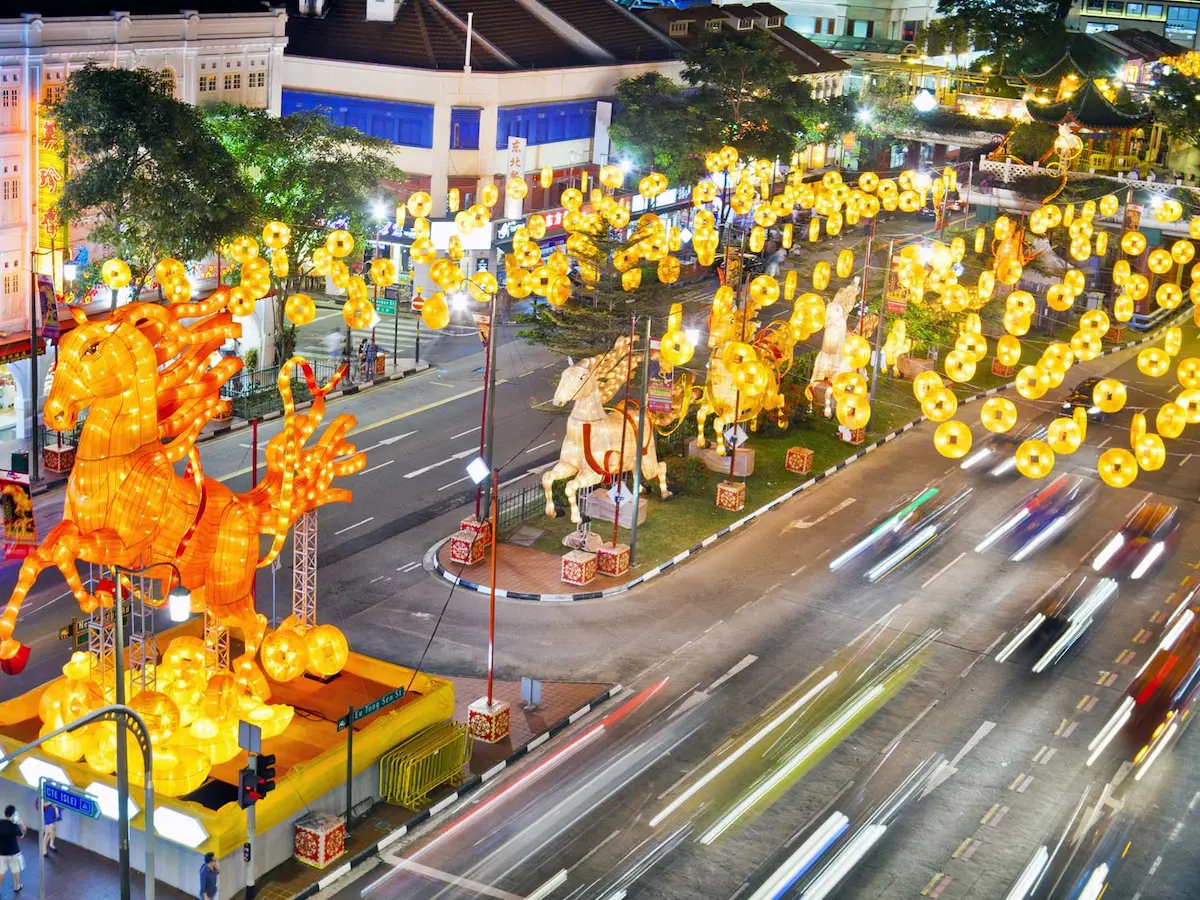
Chinatown transforms into Singapore’s festive epicentre, with streets adorned by elaborate lantern displays, horse-themed installations, and bustling street markets. Between New Bridge Road and Eu Tong Sen Street, you’ll find traditional handicrafts, festive snacks, and nightly performances creating an atmosphere impossible to replicate elsewhere in the city. The energy here is infectious—chaotic yet charming, crowded yet welcoming.
River Hongbao
Held at Gardens by the Bay, this flagship annual event showcases giant illuminated lantern installations, cultural exhibitions, live performances, and sprawling food streets. The 2026 edition promises similarly grand-scale attractions, with nightly shows and fireworks displays providing spectacular entertainment for families and friends alike.
Chingay Parade 2026
Scheduled for 27 and 28 February 2026, the Chingay Parade stands as one of Asia’s largest street parades, featuring towering floats, over 3,000 dancers, acrobats, and performers from diverse cultural backgrounds. The 2026 theme celebrates Singapore’s rich heritage through a transformable, multi-tier stage design, representing the nation’s imagination and multicultural identity. This iconic event showcases the parade’s commitment to innovation whilst honouring tradition—a balance that defines CNY celebrations throughout Singapore.
Spring Blossoms at Gardens by the Bay
Running from 16 January to 1 March 2026, the Flower Dome presents a spectacular festive floral display featuring ink painting-inspired lantern horses amongst historically significant Chinese plants. The exhibition draws inspiration from classical Jiangnan gardens that influenced China’s greatest poets, creating an environment where horticulture and cultural heritage intertwine.
Singapore Chinese Cultural Centre Exhibitions
The SCCC hosts exhibitions exploring Singapore’s lion dance heritage and Traditional Chinese Medicine history. “Tradition in Motion: Singapore’s Lion Dance Heritage” features over 50 artefacts and photographs documenting how local lion dance troupes have evolved, offering insights into this captivating art form. Simultaneously, the “Healing Heritage” exhibition illustrates TCM’s historical development and contemporary applications.
Festive Markets and Shopping
Various shopping destinations host festive markets throughout the season. Jewel Changi’s Chinese New Year Festive Market (5-12 February) features plant and gardening-themed booths, appealing to those with horticultural resolutions. The Singapore Mint operates roadshows across heartland malls, showcasing equine-themed coins and exclusive collectible items celebrating the Year of the Horse.
How Locals Celebrate
Beyond attending events, Singaporeans observe CNY through intimate personal traditions. The first few days involve visiting relatives and friends, strengthening relationships through warm greetings and genuine expressions of well-wishes. These visits reinforce familial bonds whilst spreading joy throughout communities.
Avoiding taboos on the first day remains important to many. Sweeping floors or using negative language on this day is believed to drive away good fortune, so families consciously refrain from these activities. Similarly, wearing new clothes in bright colours—particularly red—reflects hopes for prosperity and positive energy.
Practical Tips for CNY 2026 in Singapore
When planning your CNY 2026 in Singapore celebration, book accommodation and restaurant reservations well in advance, particularly for reunion dinners which fill rapidly. Expect certain shops and smaller restaurants to close on the first two days, though major shopping malls and established eateries typically reopen quickly. Roads near Chinatown experience partial closures during event periods, so plan travel routes accordingly. If you wish to experience lion dance performances, explore these early in the festive period as they become increasingly difficult to locate after the third day.
Bring a camera—Singapore reaches peak photogenic appeal during CNY season, with lantern displays, dressed storefronts, and vibrant street scenes providing endless visual interest. Respect cultural customs when visiting temples or homes, understanding that these spaces hold spiritual significance beyond their aesthetic appeal.
Creating Your CNY 2026 Celebration
Whether you plan to feast extensively, explore cultural sites, experience lion dances, or participate in family traditions, CNY 2026 in Singapore promises a rich, multifaceted celebration. This Year of the Horse encourages bold action, new experiences, and living with increased vitality—values that align perfectly with Singapore’s dynamic festive season. The combination of ancient traditions and modern celebrations creates something uniquely Singaporean, where cultural heritage thrives alongside contemporary entertainment and community gatherings that welcome everyone.





Geopolitical instability and interconnected risks raise fears of Black Swan scenarios

Cardumen Capital Strengthens Global Reach Through Its Taipei-Based APAC Partner Following NVIDIA's Acquisition of Its Portfolio Company Illumex

VinEnergo Announces Global Strategy, Deploys First 10 GW International Renewable Energy Portfolio

Why Gold Medalist Alysa Liu Is Suddenly Everywhere
15 Best Restaurants In Singapore Locals Love In 2026
Free Fireworks this March 2026 Light Up Marina Bay
Ramadan 2026: Iftar Spots & Bazaar Guide Singapore

Geopolitical instability and interconnected risks raise fears of Black Swan scenarios

Cardumen Capital Strengthens Global Reach Through Its Taipei-Based APAC Partner Following NVIDIA's Acquisition of Its Portfolio Company Illumex

VinEnergo Announces Global Strategy, Deploys First 10 GW International Renewable Energy Portfolio
