Cross-Border E-Hailing (Singapore-Malaysia): Current Challenges and Future Prospects
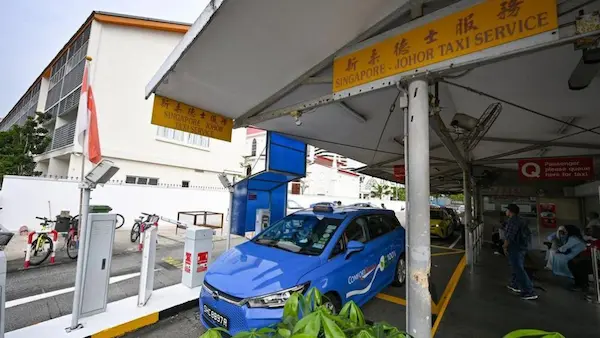
Photo Credits: https://asianews.network
The debate surrounding cross-border e-hailing Singapore Malaysia has intensified in August 2025, as authorities grapple with balancing commuter convenience against regulatory oversight and driver livelihoods. Despite growing demand for seamless cross-border transport solutions, Singapore’s Land Transport Authority (LTA) has firmly stated that full liberalisation of ride-hailing services between the two nations remains off the agenda.
Current Cross-Border Transport Framework
The existing Cross Border Taxi Scheme (CBTS) represents the only legitimate framework for cross-border e-hailing Singapore Malaysia operations. This reciprocal arrangement permits up to 200 licensed taxis from each country to ferry passengers across the Causeway, but with significant operational constraints that have contributed to widespread underutilisation.
Licensed taxis operating under the scheme face strict geographical limitations. Singapore-registered vehicles can only drop off passengers at Larkin Sentral in Johor Bahru, whilst Malaysian taxis are restricted to Ban San Street Terminal in Singapore. This single-point arrangement severely limits the convenience factor that modern commuters expect from transport services.
The scheme currently costs passengers S$60 per trip for cross-border journeys, regardless of passenger numbers, with each taxi accommodating a maximum of four adults. However, within their home countries, these licensed operators enjoy greater flexibility, able to collect passengers from multiple locations subject to additional fees.
Enforcement Crackdown on Illegal Operators
Singapore authorities have significantly ramped up enforcement against illegal cross-border e-hailing Singapore Malaysia services throughout 2025. Recent operations have yielded substantial results, with 19 drivers apprehended in early August alone, bringing the total to 136 drivers caught since 2022.
The enforcement efforts have been notably comprehensive, involving joint operations between LTA and the Immigration and Checkpoints Authority at land checkpoints, alongside patrols at high-traffic locations including Gardens by the Bay and Changi Airport. All intercepted vehicles have been impounded, creating substantial financial consequences for offenders.
These illegal operators have been undermining the legitimate taxi industry by offering door-to-door services that circumvent the restrictive pick-up and drop-off requirements imposed on licensed operators. Many utilise larger vehicles such as MPVs that can accommodate seven or eight passengers, charging upwards of S$90 for services that include flexible routing and destination options.
Industry Struggles and Economic Pressures
Licensed taxi drivers on both sides of the Causeway face mounting economic pressures that threaten the viability of legitimate cross-border e-hailing Singapore Malaysia services. Many drivers report waiting over 10 hours for a single fare, with some sleeping in their vehicles overnight due to lack of passengers.
The financial burden on legitimate operators extends beyond lost revenue. Licensed drivers must absorb various costs including seasonal parking fees of approximately S$30 monthly, trip fees at Larkin Sentral around RM15 (S$4.60), and bi-annual permit renewals costing S$50. These expenses, combined with rising fuel costs and vehicle rental fees of up to S$120 daily for newer models, severely impact profitability.
The fixed pricing structure compounds these challenges, as it fails to account for peak hours or congestion levels on the Causeway. This inflexibility has been identified by transport economists as a contributing factor to the scheme’s poor uptake rates.
Government Response and Proposed Solutions
Both Singapore and Malaysian authorities acknowledge the need for improvements to the current cross-border e-hailing Singapore Malaysia framework. Following discussions between Acting Transport Minister Jeffrey Siow and Johor Chief Minister Onn Hafiz Ghazi in August 2025, several potential enhancements have been proposed.
LTA is considering expanding the number of boarding and alighting points in both countries to improve passenger convenience. The authority is also exploring the integration of ride-hailing applications for booking licensed cross-border taxi services, though this would not constitute full liberalisation of the sector.
Additional proposals include increasing the quota for licensed taxis from both countries and expanding the range of vehicle types permitted under the scheme. However, as CBTS represents a reciprocal arrangement, any modifications require mutual agreement from both governments.
Safety and Insurance Considerations
The proliferation of illegal cross-border e-hailing Singapore Malaysia services raises significant safety concerns for passengers. Unlicensed operators typically lack appropriate insurance coverage, leaving passengers vulnerable in the event of accidents. Transport experts emphasise that passengers using illegal services may find themselves without adequate protection should incidents occur during cross-border journeys.
Senior Minister of State for Transport Sun Xueling has highlighted these risks, noting that illegal services “put passengers at risk and harm the livelihoods of law-abiding licensed drivers”. The enforcement actions aim to protect both consumer safety and the legitimate transport industry.
Economic Impact and Market Dynamics
The cross-border e-hailing Singapore Malaysia sector faces complex economic dynamics that extend beyond simple supply and demand. Despite record border crossings exceeding 578,000 on a single day in June 2025, legitimate taxi services struggle to capture market share.
Consumer preferences favour door-to-door services that illegal operators provide, creating a substantial competitive disadvantage for licensed taxis bound by geographical restrictions. Many passengers willingly pay premium rates for the convenience of direct routing, with some services charging up to S$400 for full-day transport packages.
The price differential between legal and illegal services is less significant than the convenience gap. Whilst illegal operators may charge more than the fixed S$60 rate for licensed taxis, they offer superior flexibility in routing, vehicle capacity, and destination options that appeal to modern commuters.
Future Outlook and Industry Evolution
The cross-border e-hailing Singapore Malaysia landscape appears poised for gradual evolution rather than revolutionary change. Whilst full liberalisation remains politically and administratively complex, incremental improvements to the existing framework seem probable.
Industry stakeholders continue advocating for enhanced flexibility in boarding and alighting points, integration with modern booking platforms, and more responsive pricing structures. The Singapore-Johor Taxi Association has particularly emphasised the need to “keep up with the times” by embracing technological solutions that meet contemporary passenger expectations.
Transport consultants suggest that successful reform will require comprehensive bilateral agreements addressing regulatory harmonisation, enforcement protocols, and standardised licensing procedures. Such frameworks would need to balance competitive market forces with protection for existing driver livelihoods.
As discussions continue between Singapore and Malaysian authorities, the cross-border e-hailing Singapore Malaysia sector remains at a crossroads between traditional regulatory approaches and the evolving demands of modern cross-border mobility. The resolution of these challenges will significantly impact the future of regional transport integration and economic connectivity between the two nations.
The ongoing enforcement actions against illegal operators, combined with proposed enhancements to legitimate services, suggest that authorities are committed to finding sustainable solutions that protect both consumer interests and industry stability. However, the timeline for implementing meaningful reforms remains uncertain, leaving the sector in a transitional state that continues to challenge both regulators and service providers.





Valle Venia presents: LPS feat. Natalia Sarsgard: J’ai dû m’arrêter

Shopee Expands VIP Benefits This 4.4 with Daily Free Shipping RM0 Minimum Spend, Early Access Deals and Vouchers Worth Up to RM4,400

YesAsia Holdings Achieves Record-Breaking Revenue and Net Profit in 2025

General Practitioners Support Mental Health in Singapore

How Fuel Price Hike Affects the Singapore Economy
Win $75 CDC Vouchers On Singapore Walking Trails
PetExpo 2026: Singapore’s Biggest Pet Fair

Valle Venia presents: LPS feat. Natalia Sarsgard: J’ai dû m’arrêter

Shopee Expands VIP Benefits This 4.4 with Daily Free Shipping RM0 Minimum Spend, Early Access Deals and Vouchers Worth Up to RM4,400

YesAsia Holdings Achieves Record-Breaking Revenue and Net Profit in 2025