

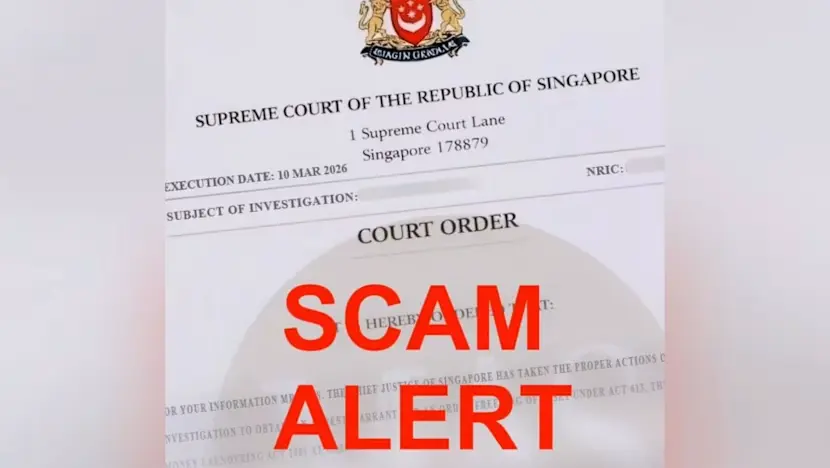
Photo Credits: CNA
The fake court order scam in Singapore has emerged as a cunning ploy where fraudsters send forged documents mimicking official judiciary notices. These scams prey on fear by threatening legal action unless immediate payments are made, often via messaging apps. Singapore Courts issued a public advisory in March 2026 to alert residents after reports surfaced of such deceptive tactics.
This scam fits into a broader surge in impersonation frauds targeting trust in government institutions. Victims receive what looks like authentic paperwork, complete with formal language and seals, urging them to wire funds to specified accounts. Awareness is key, as these schemes exploit urgency to bypass rational checks.
How the Scam Unfolds
Scammers typically deliver fake court orders through WhatsApp, Telegram, or email, platforms that lend a false sense of immediacy. The documents claim a court mandate requires payment to settle alleged debts, fines, or avoid asset seizures, with deadlines that heighten panic. Recipients are directed to transfer money to personal bank accounts, sometimes under threats of arrest or property confiscation.
Unlike genuine proceedings, these notices lack proper channels and demand sensitive details like bank logins or one-time passwords. The forged orders may reference real addresses or partial personal data to seem credible, a tactic borrowed from earlier phone-based variants. This psychological pressure aims to prompt hasty compliance without verification.
In one common pattern, the scam starts with a message alleging a longstanding case suddenly activated, complete with invented case numbers. Victims feel cornered, believing non-payment invites enforcers to their doorsteps. Such details mirror past scams but evolve with digital delivery for wider reach.
Official Stance from Singapore Courts
Singapore Courts explicitly state they never issue orders via unofficial apps or request fund transfers through phone, email, or messages. Legitimate documents arrive via formal post or e-services, never with payment instructions to private accounts. The judiciary emphasises no demands for bank credentials or instant wires occur in real cases.
This advisory, posted on their Facebook page on 16 March 2026, urges ignoring unsolicited notices and reporting them swiftly. Courts handle disputes through structured processes, not ad-hoc digital threats. By clarifying these boundaries, they dismantle the scam’s facade of authority.
Verification Steps for Suspicious Documents
Anyone receiving a questionable court order should head straight to the Authentic Court Orders (ACO) portal at www.courtorders.gov.sg. This free tool lets users scan QR codes or enter access codes from documents to confirm legitimacy instantly. Genuine orders feature verifiable unique identifiers; fakes do not.
If no code appears or verification fails, treat it as fraudulent. Contact Singapore Courts via official lines or visit state courts in person for clarification. Avoid engaging scammers, as dialogue often leads to more pressure tactics.
Forward suspicious files to authorities without delay. This not only protects you but helps track scam networks. Simple habits like screenshotting before deletion preserve evidence for probes.
Reporting and Seeking Help
Dial the ScamShield hotline at 1799 immediately upon spotting a fake court order scam in Singapore. This service, run by the Anti-Scam Centre, guides on next steps and logs incidents for investigation. Police advise blocking sender numbers and securing accounts post-exposure.
For broader support, use the police e-services portal or visit a neighbourhood station. Early reporting disrupts operations, as seen in rising arrests for impersonation rings. Community vigilance amplifies these efforts.
Rising Tide of Impersonation Scams
The fake court order scam in Singapore reflects a doubling of government official impersonations, from 1,504 cases in 2024 to 3,363 in 2025. Losses soared 60% to S$242.9 million, hitting seniors hardest via phone and WhatsApp. Fraudsters pose as police, ICA, or MAS officers routinely.
This trend underscores digital vulnerabilities, with scammers refining tactics yearly. Bulk fake orders and enforcement threats parallel these, showing coordinated evolution. Public advisories counter this, but personal caution remains vital.
Spotting Red Flags Early
Watch for unsolicited contacts demanding money under legal guises—these scream scam. Authentic authorities never rush payments or use informal channels. Cross-check sender details; official emails end in .gov.sg, not generic domains.
Emotional manipulation is another hallmark: fear of jail or loss pushes rash acts. Pause, verify independently, and consult trusted advisors. Demographics like retirees face higher risks due to isolation, but all ages must adapt.
Protecting Yourself Long-Term
Install ScamShield app for real-time alerts on flagged numbers. Enable two-factor authentication on banks and limit sharing personal info online. Educate family via group chats on these threats, fostering collective defence.
Regularly review bank statements for odd transactions. If scammed, freeze accounts pronto and file claims—banks offer shields for verified frauds. Proactive mindset turns potential victims into sentinels.
Broader Implications for Singaporeans
This fake court order scam in Singapore erodes faith in institutions, yet robust responses like ACO portal rebuild it. With fintech growth, blending legal fears with money grabs intensifies. Policymakers push education drives, integrating scam modules in community centres.
Businesses too must wary: fake bulk orders disrupt operations similarly. Unified reporting via national helplines strengthens data analytics against perpetrators. Singapore’s low scam tolerance, backed by swift enforcement, sets a regional benchmark.
What Happens If You Fall Victim
Should payment occur, contact your bank immediately to recall funds—success varies by timing. Lodge a police report for investigation; recoverable assets hinge on tracing mules. Counsellors at victim support lines aid emotional recovery.
Insurance policies increasingly cover cyber fraud; check yours. Sharing anonymised stories deters others, amplifying deterrence. Resilience stems from learning, not shame.
In sum, the fake court order scam in Singapore thrives on deception but crumbles under scrutiny. By verifying via official means and reporting promptly, residents safeguard finances and community trust. Stay informed, stay secure—Singapore’s systems empower you against such ploys.





How Fuel Price Hike Affects the Singapore Economy

Win $75 CDC Vouchers On Singapore Walking Trails

JioStar Unlocks India’s Billion-Strong Consumer Base for Southeast Asia Brands via Live Sports

How Fuel Price Hike Affects the Singapore Economy
Win $75 CDC Vouchers On Singapore Walking Trails

PetExpo 2026: Singapore’s Biggest Pet Fair
Fake Court Order Scam in Singapore Alert
How Fuel Price Hike Affects the Singapore Economy
Win $75 CDC Vouchers On Singapore Walking Trails

JioStar Unlocks India’s Billion-Strong Consumer Base for Southeast Asia Brands via Live Sports
