

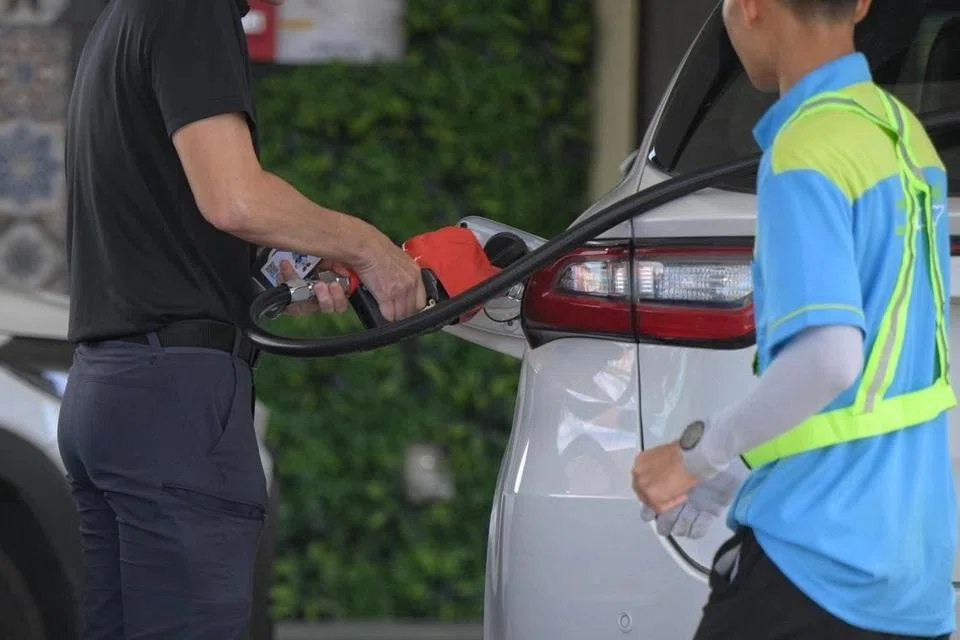
Photo Credits: The business times
The latest fuel price hike in Singapore has been driven by a sharp rise in global crude‑oil prices, triggered by geopolitical tensions in West Asia and disruptions to key shipping routes such as the Strait of Hormuz. As a small, open economy that imports almost all of its crude and refined fuels, Singapore’s pump prices tend to mirror international benchmarks closely. When oil benchmarks climbed above the equivalent of around 90–100 US dollars per barrel in early 2026, petrol and diesel prices at the pump in Singapore quickly moved above 3 dollars per litre for many grades, representing some of the highest nominal levels seen in the region.
This surge is not an isolated spike; it follows a broader pattern where each time global supply‑side risks flare up, Singapore’s energy‑import‑dependent structure exposes both consumers and businesses to rapid pass‑through. The fuel price hike, therefore, is less about local policy design in the short term and more about how global shocks are amplified within the Singapore economy through traded‑fuel exposure and high energy intensity in transport and logistics.
Impact On Households And Daily Spending
For Singapore households, the fuel price hike is most visible at the pump, in taxi and private‑hire fares, and in public‑transport‑linked costs such as bus and ferry services. Petrol prices of around 3–3.5 dollars per litre mean that routine errands and weekend trips become noticeably more expensive, especially for those who rely on cars for work or caregiving. With diesel prices rising similarly, owners of commercial vehicles such as vans and delivery trucks also see a direct hit to their monthly operating costs.
Higher fuel costs are also feeding into everyday essentials. Energy accounts for a significant share of transport, refrigeration, and production costs; when fuel prices jump, these extra costs gradually seep into the price tags of food, groceries, and imported goods. Economists have noted that if crude stays elevated around 90 dollars per barrel for an extended period, headline consumer‑price inflation in Singapore could rise from roughly 1.3 per cent to around 1.8 per cent, squeezing the purchasing power of middle‑ and lower‑income households more acutely.
For households that already devote a large share of income to transport, such as shift workers or gig‑based drivers, the fuel price hike can quickly erode take‑home earnings. Reports from drivers indicate that even after working longer hours, weekly incomes have dipped because the extra petrol consumed does not translate into proportionate fare revenue. This dynamic risks pushing some workers closer to financial stress, especially if the fuel price hike is prolonged.
Pressure On Businesses And Transport Operators
The fuel price hike has put particular strain on Singapore’s transport and logistics sectors, which are central to the city‑state’s role as a global trade and shipping hub. Private‑hire and taxi operators have seen their operating margins shrink as fuel surcharges only partially offset the jump in pump prices. Many platforms and taxi companies have tried to cushion drivers with one‑off vouchers or lower‑cost fuel at in‑house pumps, but these measures are often short‑term and do not fully compensate for the 20 per cent or more increase in fuel costs witnessed after the recent spike.
Land‑based freight firms, delivery services, and cross‑border bus operators have also recorded higher operating expenses, in some cases by around 30 per cent, largely because of fuel. To cope, companies are optimising routes, adjusting schedules according to demand, and trimming off‑peak fleet usage. While these efficiency gains help, they cannot fully insulate businesses from the fuel price hike, especially when global oil prices remain elevated.
Maritime and aviation segments are not exempt either. Ferry operators have introduced fuel surcharges on popular routes to Batam and Bintan, while airlines have begun recalibrating fares on certain international routes to reflect higher jet‑fuel costs. As Singapore relies on air and sea links for tourism, trade, and regional connectivity, persistent fuel pressures could gradually alter travel patterns, tourism flows, and shipping itineraries, making the fuel price hike a structural concern for the Singapore economy rather than just a temporary cost spike.
Inflation, Productivity, And Growth
Beyond the pocket‑book impact, the fuel price hike raises broader questions about inflation control and long‑term growth in the Singapore economy. Higher energy prices feed into several inflation transmission channels: transport services, utilities, and imported goods all feel upward pressure as fuel becomes more expensive. Analysts warn that if the current “oil shock” persists, the disinflationary gains recorded in recent years could be eroded, forcing authorities to recalibrate monetary‑policy settings and possibly tighten measures to cool demand‑side pressures.
For businesses, rising fuel and energy costs can also act as a subtle drag on productivity. Instead of investing in automation, digital tools, or skills upgrading, firms may divert capital to hedging fuel exposure, renegotiating contracts, or simply absorbing higher input bills. Over time, this can slow the pace at which the Singapore economy moves up the value chain, because cost pressures crowd out innovation‑oriented spending.
On the macro level, the Singapore economy faces a “double‑whammy” risk: rising energy costs from the fuel price hike combine with potential external headwinds such as higher US tariffs and trade‑policy uncertainty. This combination could dampen export‑oriented sectors, raise import prices, and compress profit margins for manufacturers and service providers alike. Policymakers must therefore balance the need to support vulnerable households with the imperative of maintaining an open, competitive business environment.
Policy Responses And The Role Of The Government
In response to the fuel price hike, the Singapore government has signalled that it is monitoring the situation closely and is prepared to consider additional measures if the shock proves persistent. These could include targeted support for low‑ and middle‑income households, adjustments to transport‑related subsidies, or incentives for energy‑efficiency and cleaner‑fuel adoption. The government has also emphasised that any measures will be calibrated to avoid distorting market signals while still providing a safety net.
At the same time, industry associations and consumer‑advocacy groups have urged fuel retailers to adjust pump prices promptly when global benchmarks fall, arguing that quick downward adjustments can help mitigate the hit to the Singapore economy. The government’s stance is to rely primarily on market mechanisms while retaining the option to intervene if the fuel price hike leads to undue hardship or broader financial‑stability risks.
How The Singapore Economy Can Adapt
To cushion the impact of future fuel price hikes, the Singapore economy may need to deepen its shift toward energy efficiency, electrification, and diversified energy sources. Expanding public‑transport capacity, encouraging electric‑vehicle adoption, and investing in low‑carbon logistics can reduce the economy’s sensitivity to volatile oil prices. Businesses that redesign supply‑chain strategies, lock in longer‑term fuel contracts where feasible, and adopt digital‑planning tools will likely be better placed to weather the next fuel‑price shock.
For households, awareness of how the fuel price hike flows into everyday spending can help in budgeting and in choosing transport modes that minimise energy costs. For policymakers, the episode underscores the need to balance market‑based pricing with targeted social‑protection measures, ensuring that the Singapore economy remains resilient without sacrificing efficiency or competitiveness.
In sum, the recent fuel price hike is more than a temporary inconvenience at the petrol station; it is a test of how nimble the Singapore economy is in managing imported‑energy shocks while protecting living standards and maintaining growth momentum.





How Fuel Price Hike Affects the Singapore Economy

Win $75 CDC Vouchers On Singapore Walking Trails

JioStar Unlocks India’s Billion-Strong Consumer Base for Southeast Asia Brands via Live Sports
How Fuel Price Hike Affects the Singapore Economy

Win $75 CDC Vouchers On Singapore Walking Trails

PetExpo 2026: Singapore’s Biggest Pet Fair

Fake Court Order Scam in Singapore Alert
How Fuel Price Hike Affects the Singapore Economy
Win $75 CDC Vouchers On Singapore Walking Trails

JioStar Unlocks India’s Billion-Strong Consumer Base for Southeast Asia Brands via Live Sports
