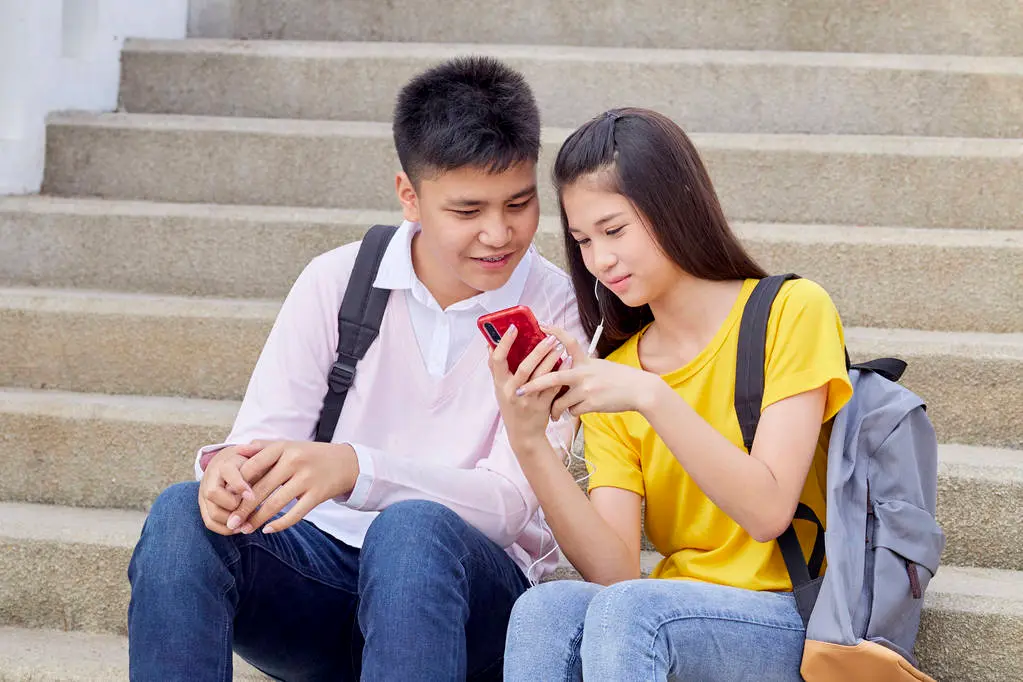
Photo Credits: Vista Create
The Ministry of Education (MOE) announced on 30 November 2025 that secondary school students will no longer be permitted to use smartphones and smartwatches during school hours from January 2026. This sweeping policy change extends far beyond the current restrictions, which only prohibit device use during lesson time. Under the new guidelines, students must stow away their devices throughout the entire school day, including during recess, co-curricular activities (CCAs), and supplementary, enrichment or remedial lessons.
The policy marks a significant shift in how Singapore addresses the growing concern of excessive screen time amongst young people. Devices must be kept in designated storage areas such as lockers or in school bags throughout school hours. Schools may, however, grant exceptions when genuinely necessary.
Aligning with Primary School Standards
The tightened guidelines for secondary schools mirror the restrictions already in place for primary school pupils since January 2025. According to MOE, some secondary schools that voluntarily adopted these stricter measures earlier have already witnessed positive outcomes. These include improved student well-being, enhanced focus during lessons, and notably more physical interaction among students during unstructured time such as breaks.
Minister of State for Education Jasmin Lau commented on the changes, noting that while technology has become integral to education and daily life, there is a pressing need to find a healthy balance. “Habits form early,” she stated, emphasising that these changes will support students in developing lifelong healthy digital habits.
Why Smartwatches Are Included
Many parents might wonder why smartwatches fall under this ban. MOE clarified that smartwatches enable communication through messaging and provide access to applications including social media. This functionality can lead to distractions, passive screen use, and reduced interaction with peers—precisely the outcomes the ministry seeks to prevent.
The decision reflects a growing global understanding that smart devices, regardless of their form factor, present similar challenges to focus and social development when used without boundaries during school hours.
Part of the Grow Well SG Strategy
The policy requiring no smart devices for secondary schools in Singapore represents one component of the broader Grow Well SG initiative, a national health promotion strategy launched in January 2025. This whole-of-government approach aims to help families and children reinforce good screen use habits whilst providing clearer, more actionable guidance on managing digital consumption.
The strategy addresses five key areas for healthy child development: eating well, sleeping well, learning well, exercising well, and bonding well. Purposeful screen use forms a central pillar of this approach, with research indicating that inappropriate and excessive screen use leads to poorer language skills, shorter attention spans, and displacement of other essential activities such as sleep, physical activity, and face-to-face interactions.
Concerning Screen Time Statistics
The urgency behind this policy becomes apparent when examining recent data on youth screen time in Singapore. A survey jointly conducted by CNA and the Institute of Policy Studies revealed that teenagers aged 13 to 19 spend nearly 8.5 hours on average daily using their electronic devices. Smartphones consume the largest portion of this time, accounting for approximately 3.5 hours each day.
Perhaps more concerning, 58.8 per cent of teens surveyed indicated they use their devices to cope with stress or negative emotions. Additionally, 62.5 per cent of teenagers find it difficult to reduce their screen time, suggesting an imbalanced and potentially unhealthy relationship with technology.
A government survey published in September 2025 found that approximately a quarter of teens aged 13 to 17 spent more than four hours daily on digital devices during weekdays, with that figure rising to nearly half on weekends.
Mental Health Implications
Research consistently demonstrates connections between excessive screen time and youth mental health challenges. A study by the Institute of Mental Health found that nearly half of Singaporean youth aged 15 to 21 have “problematic smartphone use”. Those affected were at least three times more likely to experience symptoms of moderate or severe depression, anxiety, and insomnia.
International research supports these findings. Studies show that teenagers with four or more hours of daily non-schoolwork screen time are significantly more likely to experience depression symptoms, anxiety symptoms, irregular sleep routines, and insufficient peer support compared to those with lower screen time. A randomised clinical trial published in JAMA Network Open found that reducing leisure-time screen media use had measurable positive effects on children’s and adolescents’ behavioural difficulties, particularly in mitigating internalising behavioural issues and enhancing prosocial behaviour.
Changes to Personal Learning Device Settings
Beyond the smart device restrictions, MOE announced adjustments to personal learning devices (PLDs) that secondary students have used since 2021. The default time that these devices enter “sleep mode” will shift from 11pm to 10.30pm, effective from January 2026. This means PLDs will be locked nightly from 10.30pm to 6.30am.
“This can help students to manage device use before bedtime, and nudge them to sleep earlier,” MOE stated.
Parents currently have the option to modify or disable the Device Management Application on their child’s PLD after school hours. However, MOE strongly encourages those who have opted for less restrictive settings to consider aligning with the new 10.30pm default.
School Autonomy and Enforcement
While MOE provides the overarching guidelines, individual schools retain autonomy to formulate their discipline policies and school rules in alignment with these directives. This allows schools to adapt implementation to suit their specific student profile and context.
For cases of smartphone or smartwatch misuse, schools typically work with students and engage parents to address underlying issues rather than immediately imposing punitive measures. The focus remains on helping students develop strategies to manage their device use responsibly as part of an educative process. Where necessary, disciplinary actions will reinforce responsible device use.
Different Rules for Older Students
Students in junior colleges and Millennia Institute are expected to have developed sufficient self-management skills and discipline to use personal smartphones and smartwatches responsibly. However, device use during lessons should still be restricted, with explicit permission required from teachers. Outside of lesson time, these older students may be allowed to use their devices when needed.
Singapore Joins Global Movement
Singapore’s decision aligns with a growing international trend. According to UNESCO analysis, more than 60 countries now ban smartphones in classrooms by law or policy. France implemented bans in primary and secondary schools in 2018 and has since trialled stricter “digital break” programmes. Italy extended its classroom phone ban to all educational institutions from 2024. Australia has implemented mobile phone bans across various states, and Brazil enacted federal legislation in January 2025 limiting smartphone use in schools.
These countries share similar motivations: reducing distractions, improving focus on learning, and increasing prosocial interactions amongst students.
Supporting Families Beyond the Classroom
The smart device policy forms part of a coordinated effort to support families in navigating the digital landscape. On the same day as the MOE announcement, the Ministry of Digital Development and Information and the Ministry of Social and Family Development unveiled two initiatives under Grow Well SG.
A series of digital parenting programmes will be rolled out from now until 2026, conducted by community partners including Look Up Family, TOUCH Community Services, and YouthTechSG. These workshops and webinars are designed to support families with children and youth aged 0 to 18, with different programmes tailored to various age ranges.
Additionally, a new book titled Timmy & Tammy: Guide To Digital Wellness was launched, targeting children aged three to eight. The book guides young readers on navigating online content safely, making responsible choices, and balancing digital and non-screen activities.
Moving Forward
Prime Minister Lawrence Wong addressed the issue of children’s screen time at the National Day Rally in August 2025, stating that the Government would do more to support parents and make online spaces safer for children. He encouraged parents not to use phones as a babysitter and emphasised that for infants and toddlers, the science is clear: no screen time at all.
The Government is also studying the experiences of other countries that have passed laws to tighten access to the internet and social media for children, considering what additional measures might strengthen online safety.
As secondary schools prepare to communicate the new guidelines through start-of-year talks, student handbooks, school websites, and parent briefings, the hope is that this policy will foster healthier digital habits that extend well beyond the classroom. By establishing clear expectations and facilitating school-home partnership, Singapore aims to equip its young people with the self-management skills necessary to navigate an increasingly connected world responsibly.




Valle Venia presents: LPS feat. Natalia Sarsgard: J’ai dû m’arrêter

Shopee Expands VIP Benefits This 4.4 with Daily Free Shipping RM0 Minimum Spend, Early Access Deals and Vouchers Worth Up to RM4,400

YesAsia Holdings Achieves Record-Breaking Revenue and Net Profit in 2025
General Practitioners Support Mental Health in Singapore

How Fuel Price Hike Affects the Singapore Economy
Win $75 CDC Vouchers On Singapore Walking Trails
PetExpo 2026: Singapore’s Biggest Pet Fair

Valle Venia presents: LPS feat. Natalia Sarsgard: J’ai dû m’arrêter

Shopee Expands VIP Benefits This 4.4 with Daily Free Shipping RM0 Minimum Spend, Early Access Deals and Vouchers Worth Up to RM4,400

YesAsia Holdings Achieves Record-Breaking Revenue and Net Profit in 2025