




Photo Credits: Flyco Travel
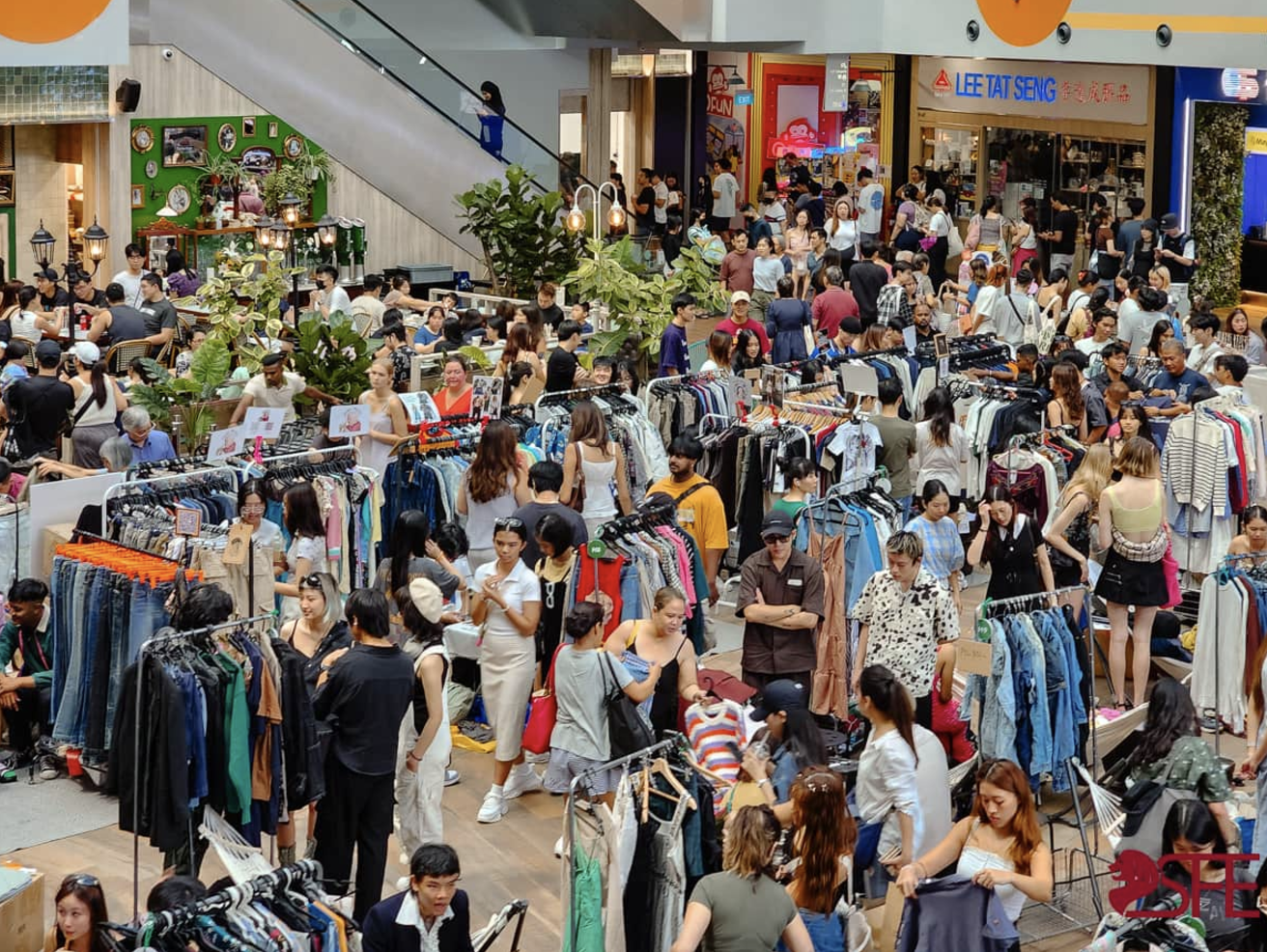
The Luggage Market holds the title of Singapore’s biggest thrift market, running weekly with over 60 booths of preloved clothing. Resurrack Vintage Flea Market sets up along Bugis Street Art Lane on selected weekends, drawing vintage clothing and accessory vendors. The Retro Factory runs periodic vintage flea markets at venues such as Katong Square, mixing home decor, vinyl records and collectables. None of these are permanent fixtures, so checking current dates before heading down matters more than it does for a fixed retail address.
This guide covers what to expect at each and how to track down the current schedule.
The Luggage Market holds the distinction of being Singapore’s biggest thrift market, running as a Sunday marketplace with over 60 booths of preloved clothing, according to HoneyKids Asia’s roundup of the city’s flea and pop-up scene. Its format lets shoppers bring items to sell as well as browse, packing clothes into a suitcase for a genuinely literal “luggage market” experience.
Resurrack Vintage Flea Market takes a more curated angle, setting up along Bugis Street Art Lane on selected weekends with vintage clothing, handmade accessories and occasional add-ons such as henna booths and vintage toy vendors, making it a reasonably family-friendly stop despite the fashion-forward focus.
The Retro Factory has built a following specifically around vintage flea markets, with past editions held at venues such as Katong Square featuring everything from rustic home decor to vinyl records, according to TheSmartLocal’s coverage of the market. No two visits are the same, since vendor lineups shift from one edition to the next, which is part of the draw for regular attendees who treat each edition as a fresh hunt rather than a repeat visit.
Here is a quick reference for planning around Singapore’s rotating flea market scene.
Market | Format | Typical Venue | Best For |
The Luggage Market | Weekly thrift market | Rotates | Preloved clothing, budget finds |
Resurrack Vintage Flea Market | Periodic weekend market | Bugis Street Art Lane | Vintage fashion, accessories |
The Retro Factory | Periodic vintage market | Varies, e.g. Katong Square | Home decor, vinyl, collectables |
Community flea markets | Monthly/weekend | HDB void decks island-wide | Neighbourhood finds, lower prices |
Smaller community-organised flea markets also run regularly at HDB void decks across the island, often coordinated through grassroots organisations, offering a lower-key and typically cheaper alternative to the more curated, socially promoted markets above.
If neighbourhood-specific shopping interests you beyond flea markets, our guide to Serangoon Garden Market covers a similarly rotating, discovery-driven side of Singapore’s food scene.
Here is the honest answer. Flea markets are inherently unpredictable. A great haul at one edition does not guarantee the next edition will have anything worth buying, since vendor lineups and stock change constantly. If you go in expecting a guaranteed find, you will likely leave disappointed at least some of the time.
What makes them worth returning to anyway is the low cost of checking. Entry to nearly all of Singapore’s flea markets is free, so the only real cost of a visit that turns up nothing is the time spent browsing. Treat a flea market trip as a low-stakes weekend activity rather than a shopping list you are guaranteed to complete.
One limitation worth naming plainly. Because these markets rotate between venues and dates, a market that ran last month may not be running this weekend at all, and official information can be scattered across social media rather than a single reliable calendar. Checking a market’s specific Instagram or Facebook page close to your planned visit is more reliable than relying on an older article’s dates.
For more of Singapore events rotating markets and pop-ups as they are announced, browse our Lifestyle section for ongoing coverage.
Can I sell my own preloved items at these flea markets? Yes, at markets such as The Luggage Market, which is specifically built around a bring-and-sell format. Other markets may require a vendor booking or fee in advance, so check the specific market’s vendor terms before assuming you can set up on the day.
Are flea market prices negotiable? Generally yes, particularly for clothing and accessories, though vendors selling vinyl records or specific collectables may hold firmer on price if the item is genuinely rare or in high demand among collectors.
Is cash necessary at Singapore’s flea markets? Cash remains the more reliable payment method at most flea market stalls, since smaller, temporary vendors are less likely to have PayNow or card payment set up compared to permanent retail stores.
How do I find out about flea markets happening in my specific neighbourhood? Grassroots organisations such as the People’s Association list smaller neighbourhood flea markets on their own event pages, which is often a more reliable source for hyperlocal markets than a general web search or social media alone.
Do flea markets in Singapore run rain or shine? It depends on the venue. Markets held in sheltered void decks or covered walkways generally continue regardless of weather, while fully outdoor markets, such as some editions at open fields, may be affected by heavy rain.
Is it worth arriving early at a popular flea market such as The Luggage Market? Yes, particularly if you are after clothing in common sizes or specific collectable items, since the best-condition pieces tend to disappear within the first hour or two once a market opens.
If you know of a flea market or vintage fair we should feature, email us at admin@dei.com.sg.