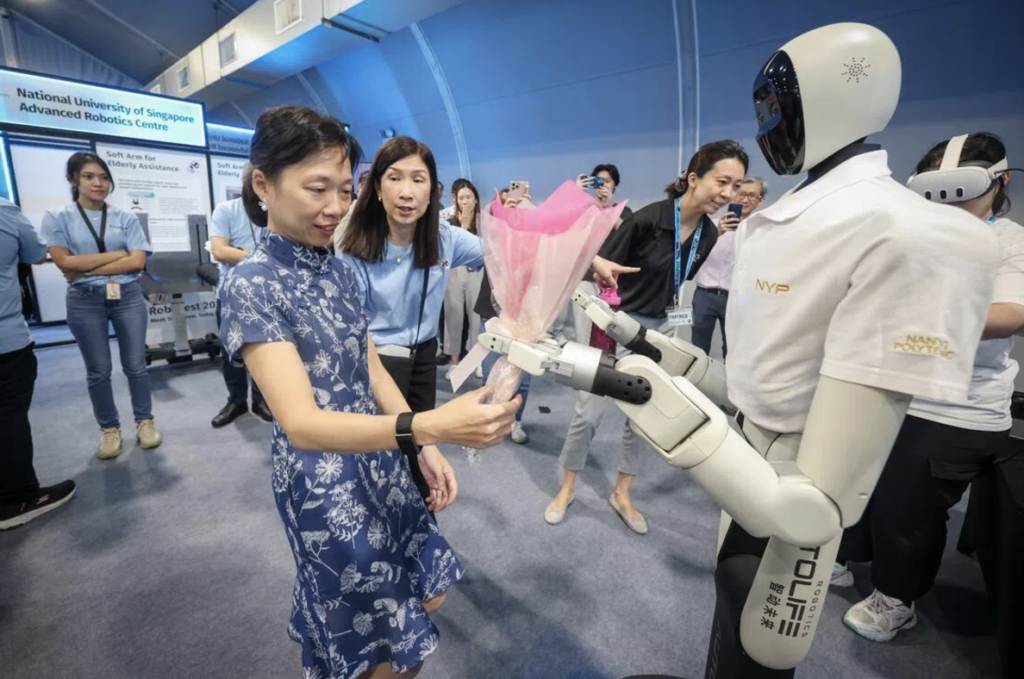







Singapore Tech Trends Q4 2026: What’s Changing For Consumers

C

Photo Credits: TheStraitTimes


Over 92% of Singapore’s population uses a smartphone daily, according to the Infocomm Media Development Authority (IMDA), and mobile penetration passed 165% back in 2024, meaning many residents carry more than one active mobile subscription. On the financial side, agentic AI, systems that can plan and carry out multi-step tasks rather than just respond to prompts, is shaping up to be the defining fintech shift of the year, according to legal industry analysis published by Allen & Gledhill LLP.

This guide breaks down what these shifts actually mean if you are not working in tech yourself.

What Are The Biggest Singapore Tech Changes For 2026?

Agentic AI is the term worth knowing this year. Unlike the generative AI tools that dominated 2024, built mainly for content creation and summarising text, agentic systems can make decisions and execute tasks across multiple steps inside a workflow without constant human prompting, according to the same industry analysis. For everyday consumers, this shows up as banking apps and customer service tools that can complete a multi-step request on their own rather than just answering a single question.

Singapore’s tech sector remains the backdrop for a lot of this. The country ranks sixth globally in fintech and hosts more than 1,730 licensed fintech startups, with a market size projected at $5.5 billion, according to industry reporting on the sector’s 2026 outlook. Blockchain-related fintech funding alone reached $1.48 billion across 82 deals in recent years, a scale that keeps drawing new products into the market.

How Is This Actually Changing What Consumers Use Day To Day?

Mobile-first is no longer a design choice for Singapore businesses. It is the default, and IMDA’s own smartphone adoption figures back that up directly. This affects how banks, retailers and even government services build their apps, with real-time interactions and AI-personalised interfaces increasingly the standard rather than a premium feature.

On the regulatory side, the Monetary Authority of Singapore’s Single Currency Stablecoin Framework and its ongoing Project Guardian initiative are pushing digital assets and tokenisation further into mainstream financial infrastructure, rather than keeping them confined to pilot programmes and sandboxes.

This regulatory shift matters because it changes who consumers can trust with digital asset products. A framework backed by MAS gives ordinary users a clearer, government-recognised standard to check a product against, rather than relying purely on a company’s own marketing claims about security and backing.

Here is a quick summary of where things stand.

Trend

What It Means For Consumers

Source Type

Agentic AI

Apps that complete multi-step tasks, not just answer prompts

Legal industry analysis

Smartphone saturation

92%+ daily use, mobile-first apps by default

IMDA data

Fintech growth

More licensed apps, embedded banking, e-wallets

Industry market reporting

Stablecoin framework

Regulated digital currency options entering mainstream finance

MAS regulatory initiative

For readers who want a deeper look at how this connects to Singapore’s broader tech landscape, our earlier State of Tech in Singapore report covers additional trends worth watching this year.

Do These Tech Shifts Actually Matter If You’re Not In The Industry?

Here is the honest answer. Most of these changes happen quietly in the background of apps you already use, rather than as something you need to actively opt into. You are unlikely to notice agentic AI by name. You will notice your banking app suddenly handling a request you used to need a phone call for.

One limitation worth stating plainly. Faster, more autonomous systems also mean more decisions get made without a human directly reviewing each step. If something goes wrong in a multi-step automated process, tracing exactly where it happened can be harder than with a simple, single-response chatbot. It’s convenient. It’s also less transparent by design.

For readers curious about specific product launches rather than broader trends, our Tech section tracks individual releases as they happen.

Frequently Asked Questions

What is agentic AI, in plain terms? It is AI that can carry out a series of connected steps on its own, such as checking your account balance, comparing a few options, and completing a transaction, rather than just answering one question at a time the way earlier chat-based tools did.

Does higher mobile penetration mean everyone has multiple phones? Not necessarily multiple phones, but many residents hold more than one active mobile subscription, for instance a personal line and a work line, which is why penetration figures can exceed 100% of the population.

Is Singapore’s stablecoin framework something regular consumers will use directly? Not typically on its own. It mostly affects licensed financial institutions and how they issue and back digital currencies, though the downstream effect may eventually appear in payment apps that adopt stablecoin-based transfers.

Should I be worried about AI making financial decisions on my behalf? Most agentic AI features in consumer apps today still require a final confirmation from you before completing sensitive actions such as transfers, so the automation generally handles the steps leading up to a decision rather than the decision itself.

How can I tell if an app I use has adopted agentic AI features? Look for language in app updates mentioning multi-step automation, autonomous task completion or AI assistants that can “take action” rather than only chat, since these are the common marketing terms used when a feature moves from simple chat to agentic behaviour.

If there is a Singapore tech trend you want us to dig into further, email us at admin@dei.com.sg.

C
Content Team
Punggol Coast Mall: Full Store Directory And What To Expect
8 September 2026
Save
Punggol Coast Mall: Full Store Directory And What To Expect
C
Content Team
Singapore Tech Trends Q4 2026: What's Changing For Consumers
7 September 2026
Save

Singapore Tech Trends Q4 2026: What's Changing For Consumers
C
Content Team
From Sleeping in a Car to Owning a Fleet of Limousines: The Story of Titanium Limousines
8 September 2026
Save

From Sleeping in a Car to Owning a Fleet of Limousines: The Story of Titanium Limousines