



Photo Credits: Seasia
I once drove past an empty field near Tampines MRT on a Tuesday and returned the following weekend to find it packed with stalls, Ramly burger smoke and a Ferris wheel that definitely was not there before. That is the nature of a pasar malam. It shows up, runs for a few weeks, and disappears just as quickly.
Here is the short version. Pasar malam, meaning “night market” in Malay, refers to Singapore’s rotating pop-up bazaars that move between neighbourhood open fields, typically running from late morning through 10pm or later. During the Ramadan season, dedicated bazaars such as the Geylang Serai Bazaar run considerably longer hours, with some editions open from 10am until nearly midnight, according to a roundup by TheSmartLocal. Outside Ramadan, smaller pasar malams continue to rotate through housing estates such as Woodlands, Tampines and Choa Chu Kang throughout the year.
This guide covers what to expect at a typical pasar malam and how these rotating markets actually work.
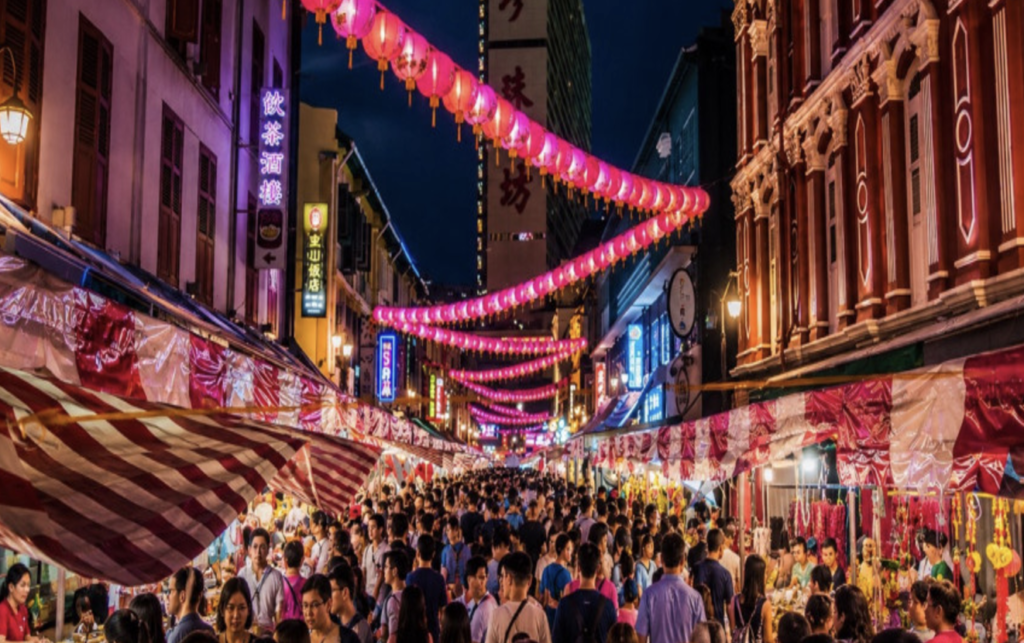
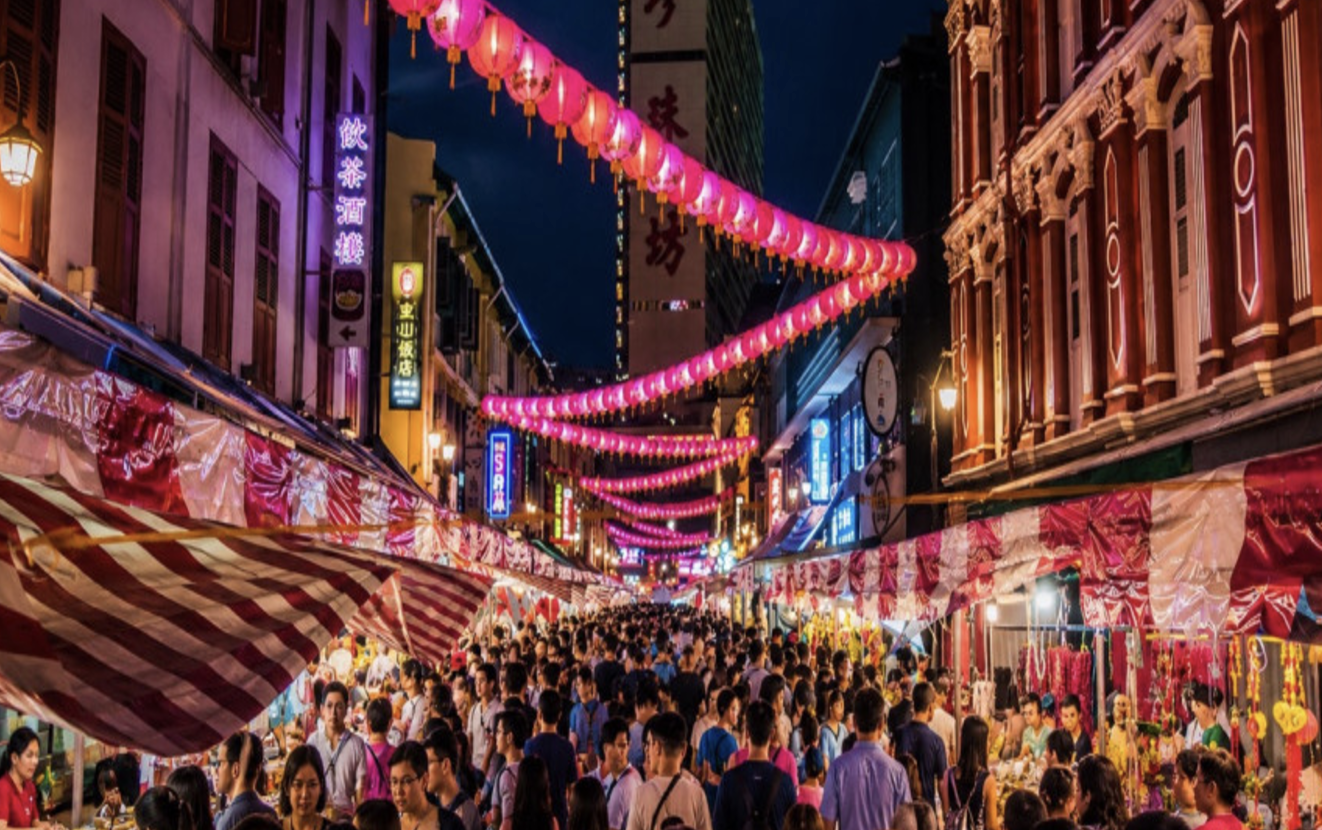
Pasar malam is an evening street market format borrowed from Malay and Indonesian tradition, distinct from a permanent wet market or a curated lifestyle bazaar. These markets typically set up on an open field or car park for a few weeks at a time before moving elsewhere, according to Expat Living’s coverage of the format. Food stalls dominate, with Ramly burgers, grilled skewers and local snacks as recurring fixtures, alongside retail stalls selling clothing, toys and household goods, plus carnival-style games and rides for children.
The Geylang Serai Bazaar, one of the most established annual editions, ran from 14 February to 21 March 2026 with extended hours from 10am to nearly midnight daily, and an even later closing time of 4am on its final night.
Because these markets rotate, there is no single permanent location to check. Past editions have popped up at locations including Woodlands MRT, an open field beside Tampines MRT station, Choa Chu Kang, Bukit Gombak and Jurong West, often timed around the Ramadan season but also appearing independently throughout the year.
Here is a general sense of what to expect once you find one.
Feature | What To Expect |
Typical hours | 12pm to 10pm (extended during Ramadan bazaars) |
Food | Ramly burgers, grilled skewers, local snacks |
Retail | Clothing, toys, household goods, phone accessories |
Entertainment | Carnival games, occasional small rides |
Duration at one site | Several weeks before relocating |
Community centre notice boards, neighbourhood Facebook groups and event listing sites tend to be more reliable for current pasar malam locations than a general web search, since these markets rarely have polished official websites of their own. Grassroots organisations such as the People’s Association also list some smaller neighbourhood flea and night markets on their own event pages, which is worth checking if a general search turns up nothing current.
If Singapore trending markets and bazaars in general interest you beyond just the pasar malam format, our guide to the retro wet market at Tan Xiang Cai Shi covers a different, permanent take on nostalgic Singapore food shopping.
Here is the honest answer. A pasar malam is not a polished, curated experience the way a lifestyle market or food festival often is. Stalls can be inconsistent in quality, and the same vendors selling phone cases or socks show up across multiple locations rather than offering something unique to that specific market.
What makes it worth a visit anyway is the atmosphere rather than any single stall. Grilled satay smoke, competing music from different stalls and the general unpolished energy of an old-school neighbourhood fair are the actual draw, not any particular find you are guaranteed to walk away with.
For more of Singapore’s rotating markets and seasonal bazaars, browse our Lifestyle section for ongoing coverage.
Do pasar malams only happen during Ramadan? No. While Ramadan bazaars such as Geylang Serai’s are the largest and most publicised editions, smaller pasar malams rotate through neighbourhood fields throughout the year, independent of the Islamic calendar.
Are pasar malam prices negotiable? Some retail stalls, particularly those selling clothing or accessories, are open to light bargaining, though food stalls generally sell at fixed prices, similar to a hawker centre.
Is cash necessary at a pasar malam, or do stalls accept digital payment? Cash remains the more reliable option at most pasar malam stalls, since smaller, temporary vendors are less likely to have set up PayNow or card payment terminals compared to permanent hawker stalls.
How long does a typical pasar malam run at one location? Durations vary, but several weeks is typical, especially for Ramadan bazaars, which can run for over a month. Smaller, non-seasonal pasar malams may run for a shorter window of one to two weeks.
Is it safe to bring young children to a pasar malam? Generally yes, since these markets are family-oriented and include child-friendly games and rides, though the crowds and evening timing mean keeping a close eye on children in the busier, more central spots is sensible.
What is the difference between a pasar malam and a Ramadan bazaar? A Ramadan bazaar is essentially a larger, seasonal version of the same pasar malam format, timed specifically around the fasting month with an emphasis on food for breaking fast in the evening, while a standalone pasar malam can appear at any point in the year without that religious tie-in.
If you know of a current pasar malam we should feature, email us at admin@dei.com.sg.