

Chinatown Food Street: A Stall-By-Stall Guide

C

Photo Credits: MotherShip

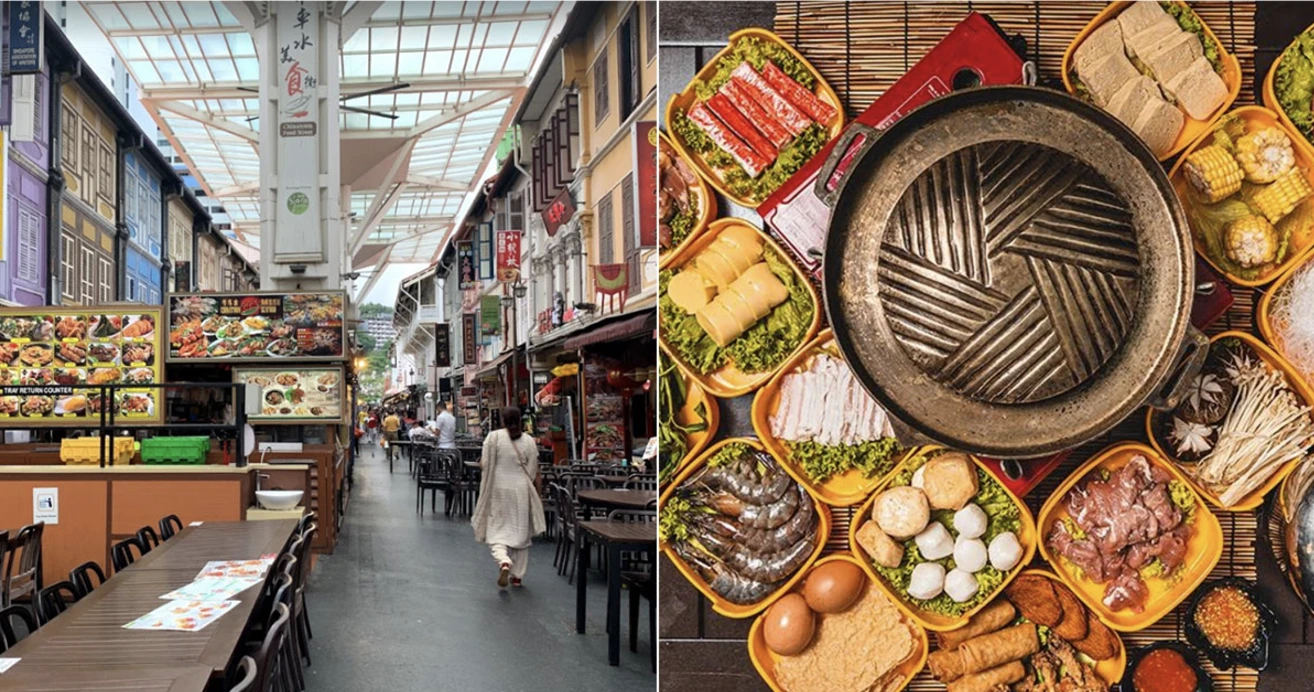
Chinatown Food Street runs along Smith Street between New Bridge Road and South Bridge Road, home to 24 hawker stalls and shop-house restaurants under a roofed, cooled structure open daily from 11am to 11pm. It sits a short walk from the much larger Chinatown Complex Hawker Centre, which houses over 260 stalls, including Michelin-recognised soya sauce chicken rice. Each suits a different kind of food trip through the district.

This guide covers what is actually worth trying at each, rather than a generic “visit Chinatown” write-up.

What Should I Order At Chinatown Food Street?

Chinatown Food Street’s 24 stalls cover a wide spread of Chinese, Malay and other Asian flavours under one roofed, air-cooled structure, managed by Select Group Limited on Smith Street. Popular dishes include satay, BBQ stingray, char kway teow and roast duck, giving visitors a genuine cross-section of Singapore’s hawker classics in one compact stretch.

Boon Tat Street BBQ Seafood is a standout for stingray specifically, a dish visitors often seek out during a first Singapore food trip. Katong Keah Kee Fried Oysters is another name worth watching for if oyster omelette, or orh luak, is on your list, known for a slightly charred, fluffy texture that distinguishes it from less careful versions elsewhere. Stalls also stretch a short distance beyond Smith Street itself, spilling onto the surrounding lanes during busier evening hours when demand outpaces the main seating area.

How Does Chinatown Food Street Compare To Chinatown Complex Hawker Centre?

Chinatown Complex Hawker Centre, a short walk from Smith Street, is a considerably larger and more locally frequented food hall, housing more than 260 stalls and functioning as a genuine daily food hall for office workers and residents rather than a curated tourist stretch. It includes Hawker Chan’s soya sauce chicken rice, among the most recognised Michelin-recognised hawker stalls in Singapore, alongside Ann Chin Handmade Popiah. The sheer scale of the complex means a first-time visitor without a specific stall in mind can find the choice overwhelming compared with Smith Street’s smaller, more curated stretch.

Here is a quick comparison between the two.

Location

Stall Count

Vibe

Best For

Chinatown Food Street (Smith Street)

24 stalls

Roofed, cooled, tourist-friendly

First-timers, compact visit

Chinatown Complex Hawker Centre

260+ stalls

Larger, more local, less curated

Deeper dive, Michelin-recognised stalls

If you are chasing more of Singapore’s award-winning hawker food beyond Chinatown, our guide to Serangoon Garden Market covers a very different, residential-area alternative.

Is Chinatown Food Street A Tourist Trap, Or Genuinely Worth It?

Here is the honest answer. Chinatown Food Street has a reputation among some locals as more tourist-oriented than the larger Chinatown Complex nearby, partly because of its roofed, curated setup and central location. That reputation is not entirely unfair. Prices at some Food Street stalls run slightly higher than an equivalent dish at Chinatown Complex, and the concentration of visitor-facing signage makes it feel more designed for tourists than a typical neighbourhood hawker centre.

That said, the food itself is not automatically worse for being tourist-accessible. Specific stalls, particularly for BBQ seafood and fried oysters, have built genuine reputations independent of the street’s overall tourist framing. The honest approach is treating it as a convenient, weather-sheltered starting point rather than assuming it represents the absolute best of Singapore hawker food.

For a broader look at Chinatown’s food scene beyond Smith Street, browse our Singapore Food section for ongoing coverage.

Frequently Asked Questions

Is Chinatown Food Street open every day, including public holidays? The street operates daily from 11am to 11pm, though individual stalls may have their own closing days, so checking a specific stall’s hours before a targeted visit is worth doing.

Is Chinatown Food Street air-conditioned? It is roofed with an integrated cooling system rather than fully air-conditioned as an indoor mall would be, offering some relief from the heat and rain compared to a fully open-air hawker centre.

Which is cheaper, Chinatown Food Street or Chinatown Complex Hawker Centre? Chinatown Complex Hawker Centre generally offers lower prices, since it caters more to daily local diners rather than tourist foot traffic, though the difference varies by specific stall and dish.

Do I need cash at Chinatown Food Street? Cash remains the safer default at most stalls, though larger or newer stalls increasingly accept PayNow or card payments, so checking with the specific stall before ordering avoids awkwardness at payment time.

How far is Chinatown Food Street from Chinatown MRT station? It sits within a short walking distance of Chinatown MRT station, making both Chinatown Food Street and the nearby Chinatown Complex Hawker Centre easily reachable without needing a taxi.

What time should I visit to avoid the biggest crowds? Weekday lunchtime and early evening tend to be quieter than weekend dinner hours, when both tourists and local diners overlap, so aiming for a late afternoon visit on a weekday gives you a shorter wait at the more popular stalls.

If there is a Chinatown Food Street stall you think deserves a mention, email us at admin@dei.com.sg.

C
Content Team
HKIS - Quantity Surveying Division Conference 2026
4 October 2026
Save
HKIS - Quantity Surveying Division Conference 2026
C
Content Team
Chinese media praises Shanghai Electric’s latest Malaysian project: a step forward for China’s high-end power equipment in overseas markets
4 October 2026
Save
Chinese media praises Shanghai Electric’s latest Malaysian project: a step forward for China’s high-end power equipment in overseas markets
C
Content Team
Huawei Highlights Continuous Innovation, Securing Competitive Edge Through Technological Breakthroughs
4 October 2026
Save
Huawei Highlights Continuous Innovation, Securing Competitive Edge Through Technological Breakthroughs