

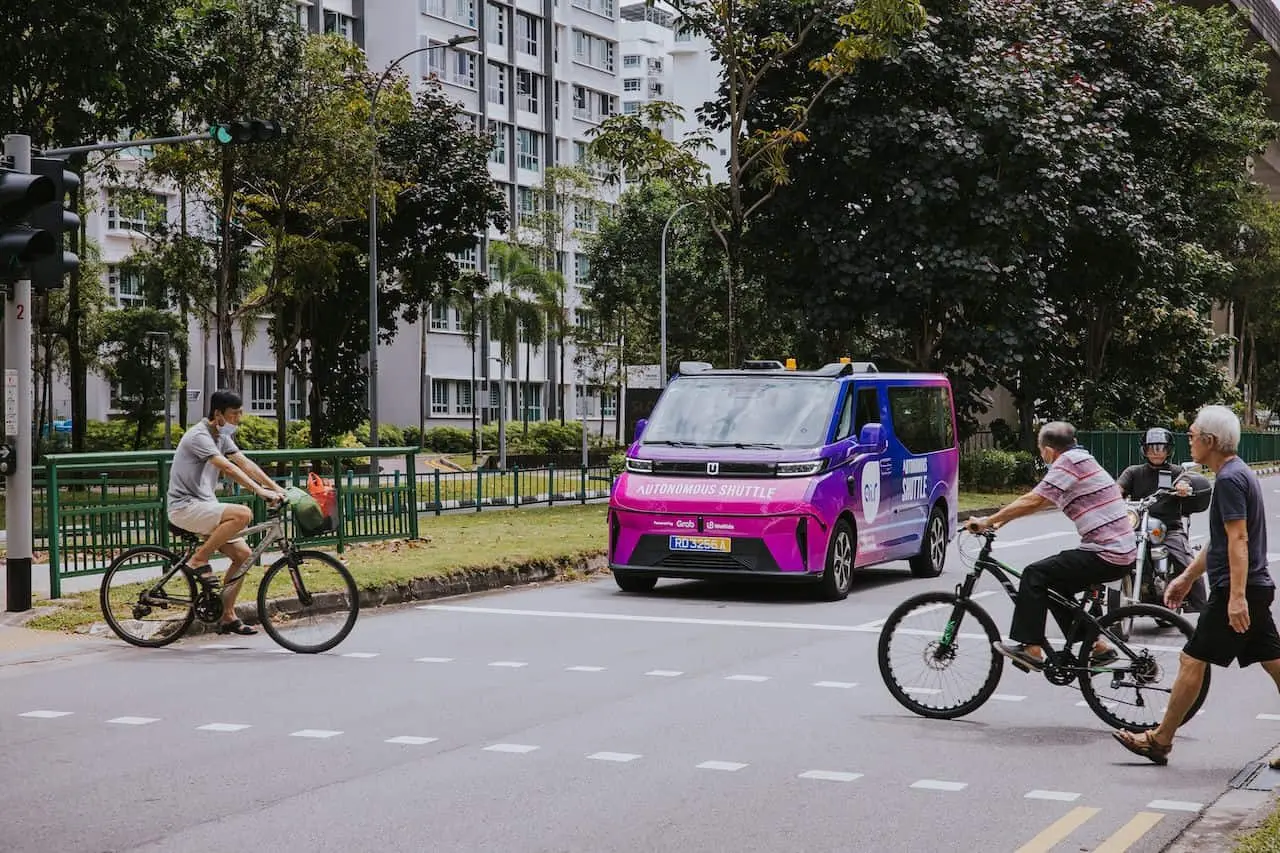
Photo Credits: Grab Singapore
Singapore has reached a significant milestone in autonomous vehicle technology deployment. The Land Transport Authority has approved Grab and WeRide to conduct comprehensive testing of their entire Ai.R driverless vehicle fleet in Punggol, marking a pivotal moment for the region’s smart transportation future. This approval represents not merely a regulatory green light, but a testament to Singapore’s commitment to establishing itself as a global leader in autonomous mobility innovation.
The journey towards this landmark decision began in mid-October 2025 when Grab and WeRide commenced their initial autonomous vehicle testing programme in Punggol. Following the successful early trials, the LTA granted full approval on 13 November 2025 for the partners to expand testing operations significantly across their designated routes. This decision reflects the regulatory body’s confidence in the technological maturity and safety protocols implemented by both organisations.
The Ai.R Fleet: Specifications and Capabilities
The Ai.R (Autonomously Intelligent Ride) fleet comprises eleven autonomous vehicles designed specifically for urban passenger transportation. The collection includes ten five-seater GXR models and one eight-seater Robobus, both engineered by WeRide, a leading autonomous driving technology company headquartered in China. These vehicles represent the culmination of years of research and development, tailored specifically for Singapore’s unique transportation environment.
What makes these vehicles particularly noteworthy is that they have successfully passed Singapore’s stringent Milestone 1 (M1) assessment, making them the first autonomous vehicles designated for Punggol to attain this critical certification. The M1 assessment is not a rubber-stamp procedure; it represents a comprehensive evaluation of the vehicles’ ability to operate safely on public roads in autonomous mode whilst strictly adhering to Singapore’s established traffic regulations.
The technological capabilities embedded within the Ai.R vehicles are sophisticated and comprehensive. Each vehicle is equipped with an advanced sensor suite providing 360-degree vision, enabling real-time perception of the surrounding environment. Remarkably, these sensors can detect objects even in challenging weather conditions such as heavy rain and intense glare from direct sunlight. This technological redundancy and sophistication ensures that the vehicles can maintain operational safety across varied Singapore weather patterns.
Real-World Testing and Data Collection
The LTA approval has enabled Grab and WeRide to substantially scale their testing operations. The partners plan to increase the total number of autonomous vehicle test runs on their designated shuttle service routes in Punggol by up to four times by the end of 2025. This dramatic expansion demonstrates both parties’ confidence in their systems and their commitment to gathering extensive real-world data before public operations commence.
During these test runs, the Ai.R vehicles engage in a continuous learning process. They systematically analyse real-world data including road infrastructure characteristics and traffic flow patterns to localise their artificial intelligence driving models for Singapore’s specific urban context. This process is crucial because autonomous vehicles must be trained to detect subtle and nuanced behaviours exhibited by local road users and pedestrians. They must also learn to respond appropriately to various environmental conditions unique to Singapore’s tropical climate.
The vehicles have been specifically programmed to operate as courteous and predictable road users. They consistently adhere to Singapore’s traffic laws, always signal before turning, refuse to accelerate through amber traffic lights to save time, and only change lanes after confirming safe clearance. This deliberate programming reflects a philosophy that positions safety and predictability as paramount considerations in vehicle behaviour.
Safety Protocols and Human Oversight
Throughout the testing phase and into the initial stages of public operations, trained safety operators will remain onboard every Ai.R vehicle. These individuals are not passengers but highly trained professionals capable of assuming direct vehicle control if necessary. The safety operators have been recruited from Grab’s pool of experienced driver-partners, individuals with established track records of safe driving and high safety ratings.
The preparation programme for these safety operators has been rigorous. Administered jointly by GrabAcademy and WeRide, the training includes comprehensive theory instruction and closed-circuit practical training on specialised test tracks. Following completion of these foundational modules, trainees progress to on-the-road training conducted directly within the Punggol environment. This tiered approach ensures that safety operators develop both theoretical knowledge and practical competency in managing the autonomous vehicles.
Route Selection and Community Benefits
Punggol has been deliberately selected as the location for this inaugural autonomous shuttle service for several compelling reasons. The neighbourhood possesses well-established travel patterns developed over years of urban habitation. The road infrastructure has reached maturity, avoiding the complications that would arise in newly developed areas with evolving traffic patterns. Moreover, extensive consultation with local residents helped shape the final route selections, ensuring that the service addresses genuine community transportation needs.
The Ai.R fleet will operate along two dedicated shuttle service routes specially curated in collaboration with the LTA and community stakeholders. These routes have been strategically designed to connect residents with essential amenities and transportation hubs. Key destinations include Punggol Coast MRT station (a crucial interchange for the broader transport network), Punggol Coast Mall bus interchange, shopping centres, and medical clinics. By connecting these critical facilities, the autonomous shuttle service will meaningfully enhance last-mile and first-mile connectivity for Punggol residents.
Regulatory Framework and Standards
The approval granted by the LTA reflects Singapore’s sophisticated and comprehensive regulatory approach to autonomous vehicle deployment. The nation has established technical standards known as TR 68, which provide a provisional but robust framework guiding the development and safe deployment of autonomous vehicles. These standards have been continuously refined and enhanced to accommodate technological advancement.
Singapore’s regulatory regime requires autonomous vehicle operators to navigate an assessment framework comprising multiple stages. The initial evaluation determines whether a proposed solution is deployable or remains in the developmental phase. Deployable solutions must demonstrate a proven track record of Level 4 autonomous operations, with at least five similar vehicles deployed for a minimum of one year, supported by comprehensive data including mileage statistics, safety records, and incident reports.
Subsequent to this categorisation, vehicles must undergo the M1 closed-circuit basic safety test, incorporating manoeuvres such as stopping in response to both dynamic and static obstacles, manual takeover procedures, and emergency stop protocols. Only following successful completion of this phase can vehicles progress to public road trials along LTA-approved routes. Additional assessment stages include stakeholder demonstrations and remote operations evaluations, which assess situational awareness, communication systems, fallback control mechanisms, and emergency protocols.
Timeline and Future Operations
Whilst the LTA approval represents a major regulatory milestone, public passenger operations remain scheduled for early 2026. This timeline allows the Ai.R fleet several additional months for comprehensive route familiarisation and real-world performance optimisation. Before any member of the public boards an autonomous vehicle, the fleet will complete hundreds of test trips along the designated routes, continually refining its ability to predict and respond to local driving behaviours and environmental changes.
From a rider experience perspective, passengers will access the autonomous shuttle service through the Grab application. The platform will display shuttle routes, operational timings, and real-time seat availability. Riders will also be able to track the live location of their assigned shuttle and view in-vehicle camera feeds. These technological features provide both convenience and enhanced transparency for users.
All Ai.R passengers will automatically receive coverage under Grab’s Personal Accident Insurance Policy the moment they board the vehicle. Additionally, a dedicated autonomous vehicle customer support team will remain available via dedicated hotline during operational hours to address passenger concerns or emergencies.
Singapore’s Broader Autonomous Vehicle Ambitions
This LTA approval of the Ai.R fleet fits within Singapore’s broader strategic vision for autonomous mobility. Since 2017, the Land Transport Authority has issued more than fifty authorisations for autonomous vehicle testing, with nineteen vehicles currently deployed on public roads. These deployments include WeRide’s Robobus at Resorts World Sentosa and autonomous riders serving Gardens by the Bay.
By establishing Punggol as Singapore’s first residential neighbourhood with an autonomous shuttle service, the island nation is signalling its commitment to practical, real-world implementation of autonomous technology. This initiative extends beyond mere technological demonstration; it addresses genuine community needs whilst simultaneously generating valuable operational data and insights that will inform autonomous vehicle deployment throughout Singapore and potentially across the Southeast Asian region.
Conclusion
As LTA approves driverless vehicles for Grab and WeRide’s comprehensive Ai.R testing, it represents a watershed moment in Singapore’s transportation evolution. Through rigorous safety protocols, sophisticated technological capabilities, and extensive real-world testing, the Ai.R fleet will demonstrate how autonomous mobility can meaningfully enhance urban connectivity and resident quality of life. With public operations scheduled for early 2026, Punggol residents and visitors will soon experience firsthand the future of Singapore’s smart, autonomous, and technologically advanced transportation ecosystem.





ICONSIAM’s ‘THAICONIC SONGKRAN CELEBRATION 2026’ to Immerse Bangkok with Thailand’s Most Spectacular Water Festival

Sanya, China Deepens Tourism Ties with Malaysia - Exclusive Benefits Launched for Malaysian Tourists, Ushering in a Tropical Island Getaway at a Moment's Notice
Money20/20 Asia Elevates Its 2026 Agenda with the Launch of The Intersection Stage, Featuring the Industry’s Most Influential Voices

Singapore Ocean Week 2026: Dive into Conservation
Easter 2026 in Singapore: What To Do Over The Long Weekend

$55 Tickets to Universal Studios Singapore: Your Complete Guide

March 2026 Singapore Trends: Key Highlights

ICONSIAM’s ‘THAICONIC SONGKRAN CELEBRATION 2026’ to Immerse Bangkok with Thailand’s Most Spectacular Water Festival

Sanya, China Deepens Tourism Ties with Malaysia - Exclusive Benefits Launched for Malaysian Tourists, Ushering in a Tropical Island Getaway at a Moment's Notice
Money20/20 Asia Elevates Its 2026 Agenda with the Launch of The Intersection Stage, Featuring the Industry’s Most Influential Voices
