




Photo Crediits: SethLui
You land at the airport, or you scroll through your first “must-try Singapore food” list, and within minutes you have thirty dish names you cannot pronounce and no idea which three to actually eat this week. Here is the direct answer. Singapore food is built on four main culinary traditions, Chinese, Malay, Indian and Peranakan, and the best way to start is not by chasing a checklist. It is by picking one hawker centre, ordering two or three dishes you have not tried, and building from there.
Food sits at the centre of daily life here, not on the side of it. Hawker culture in Singapore was recognised by UNESCO as an Intangible Cultural Heritage in December 2020, and the Singapore Food Agency recorded 23,589 licensed food shops in the country in 2024 alone, on top of thousands of individual hawker stalls. That scale is exactly why a plan helps.
Singapore is best known for hawker food, dishes cooked fast, served without ceremony, and eaten at shared tables. Chicken rice, laksa, char kway teow, chilli crab and roti prata are among the names that come up most often, but each one has dozens of local variations depending on which stall and which neighbourhood you visit.
In one sentence, Singapore’s food identity comes from blending Chinese, Malay, Indian and Peranakan cooking into dishes that exist nowhere else in quite the same form, shaped by decades of communities cooking side by side.
Start at a hawker centre rather than a standalone restaurant. A single hawker centre usually contains twenty to fifty individual stalls, each specialising in one or two dishes, which means you can try several different foods in one visit without booking anywhere or committing to one cuisine for the whole meal.
Pick a hawker centre near where you are staying rather than travelling across the island for a famous one on your first day. Almost every neighbourhood has a solid option, and comparing a heartland stall to a well-known one later gives you a useful sense of what is genuinely excellent versus simply popular online.
Singapore’s food overlaps with Malaysian and Indonesian cooking in places, since the region shares ingredients and history, but the density and mix in one small country sets it apart. You can eat Hokkien mee, biryani and nasi lemak within a five-minute walk of each other, something that is harder to replicate at this scale elsewhere in the region.
|
Cuisine Tradition |
Example Dishes |
Where to Find Them |
|
Chinese |
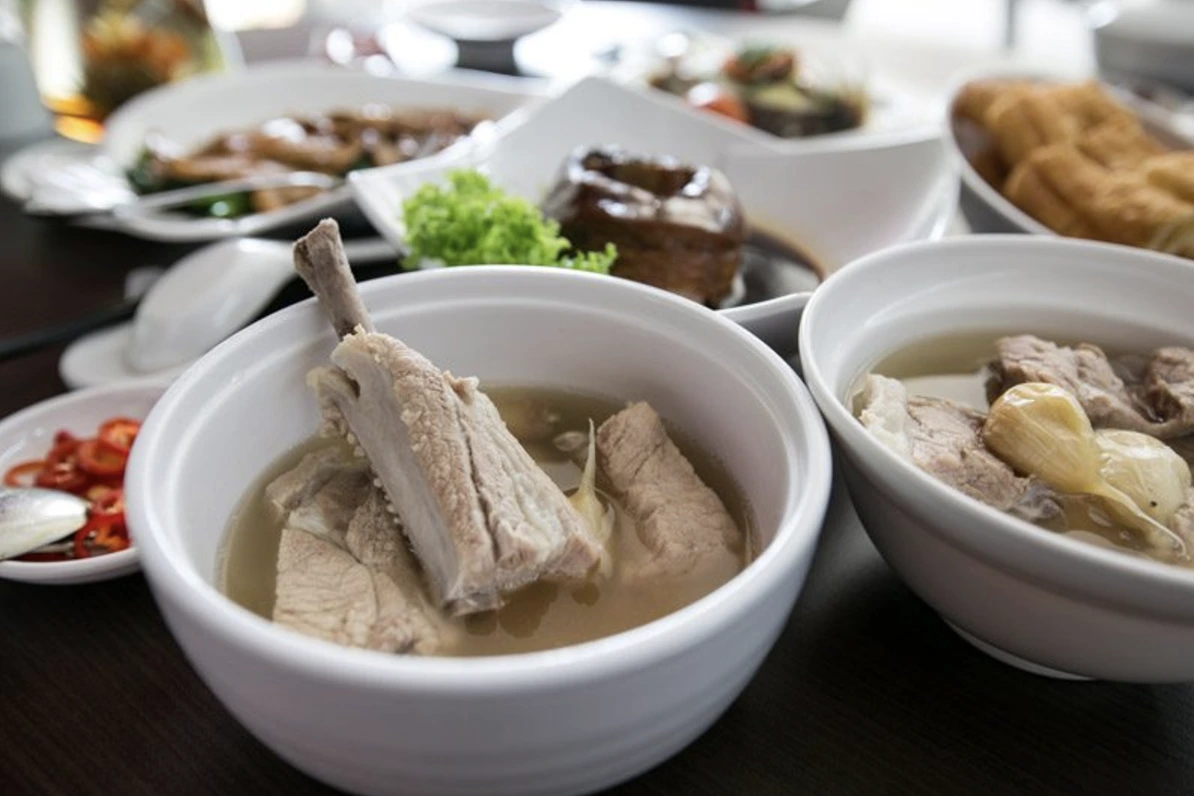
Chicken rice, char kway teow, bak kut teh |
Most hawker centres island-wide |
|
Malay |
Nasi lemak, satay, mee rebus |
Malay food stalls, Kampong Glam area |
|
Indian |
Biryani, roti prata, fish head curry |
Little India, many hawker centres |
|
Peranakan |
Laksa, ayam buah keluak, kueh |
Specialist restaurants, some hawker stalls |
One honest limitation. Not every dish is available everywhere, and some specialist Peranakan or regional dishes are only found at a handful of stalls or restaurants, so a plan built entirely around one specific dish name can lead to disappointment if that stall has closed or moved.
Yes, to a degree. Hawker centres near office areas get busy at lunch on weekdays, typically between noon and half past one, while heartland hawker centres are busiest at dinner and on weekends. Eating slightly outside these windows, even by thirty minutes, usually means a shorter queue and a table without a long wait.
Food spending in Singapore varies enormously depending on where you eat, more than in many countries. A hawker stall meal, a restaurant lunch and a fine dining tasting menu can differ by a wide margin even though all three sit under the same broad label of Singapore food. Rather than budgeting around one figure, it helps to plan meals by category, treating hawker food as your everyday baseline and restaurant meals as occasional additions.
This range is part of what makes Singapore’s food scene work for such a wide mix of residents and visitors. A office worker on a lunch break, a family celebrating a birthday, and a tourist trying everything on a list can all eat well here, just at very different price points and in very different settings.
Not as a rule. While dishes like laksa or sambal-based food can carry real heat, plenty of Singapore staples, including chicken rice, plain roti prata and many noodle soups, are mild by default. Most stalls will also adjust spice level on request, and it is completely normal to ask before ordering rather than guessing.
What is the most iconic Singapore dish to try first? Chicken rice is often the easiest entry point, since it is mild, widely available, and gives you a fair sense of how Singapore approaches a simple dish with real attention to detail.
Is street food in Singapore safe to eat? Yes. Hawker stalls are licensed and inspected by the Singapore Food Agency, and hygiene grading is typically displayed at the stall, which is a useful quick check if you are unsure.
How much does a typical hawker meal cost? Prices vary by stall and dish, and we would rather you check current pricing on-site than rely on a figure here that may already be out of date by the time you read this.
Can I find vegetarian or halal food easily in Singapore? Yes, both are widely available, particularly around Malay and Indian food areas, though it is still worth confirming with the stall directly since not every dish or stall is labelled clearly.
Explore more dishes, openings and food features in our Food section, updated regularly with new spots across the island.
Have a Singapore food story, stall or dish you think deserves coverage? Email our editorial team at admin@dei.com.sg.